
Safe-haven assets are essential tools for protecting your portfolio during market volatility and economic uncertainty. This comprehensive guide explains what safe-haven assets are, the key characteristics that make them safe, the top assets to trade, and how to incorporate them into your investment strategy in 2026.
1. What Are Safe-Haven Assets?
Safe-haven assets are financial instruments that investors flock to during periods of market volatility, economic uncertainty, or geopolitical turmoil. These assets are expected to retain or increase in value when other investments — particularly stocks and riskier assets — are declining.
The concept of safe-haven assets is rooted in the psychology of “flight to safety”. When fear grips the markets, investors seek to protect their capital by moving money into assets perceived as stable, liquid, and reliable. This behaviour creates demand for safe havens, which often drives their prices higher during crises.
Historically, safe-haven assets have proven their value during major market disruptions. During the 2008 financial crisis, gold rose from around $800 to over $1,900 per ounce by 2011. The COVID-19 pandemic in 2020 saw gold reach new all-time highs, while the US Dollar and Japanese Yen strengthened significantly. More recently, the 2022 inflation surge and geopolitical tensions have reinforced the importance of safe-haven assets in portfolio construction.
📌 Key Definition: Safe-haven assets are investments that are expected to retain or increase in value during periods of market volatility and economic uncertainty. They provide portfolio protection and capital preservation when other assets are declining.

Fig 1: The five primary safe-haven assets — Gold, US Treasuries, Japanese Yen, Defensive Stocks, and Swiss Franc.
2. Key Characteristics of Safe-Haven Assets
Not all assets qualify as safe havens. True safe-haven assets share several distinct characteristics that make them reliable stores of value during turbulent times.
High Liquidity
Safe-haven assets must be easily bought and sold without significantly affecting their price. Gold, major currencies, and US Treasuries are among the most liquid assets in the world. This liquidity ensures that investors can enter and exit positions quickly when market conditions change.
Limited Supply
Assets with finite or tightly controlled supply tend to retain value better during crises. Gold’s scarcity — annual mining production represents only about 1-2% of above-ground stock — underpins its status as a store of value. Similarly, central banks carefully manage the supply of major currencies.
Enduring Demand
Safe-haven assets benefit from consistent global demand that transcends economic cycles. Gold is used in jewellery, technology, and as a monetary asset. The US Dollar is the world’s primary reserve currency. This enduring demand provides a floor under prices during downturns.
Permanence
Safe havens are assets that do not deteriorate over time. Gold does not corrode. Government bonds have defined maturities. This permanence distinguishes safe havens from perishable commodities or assets with limited useful lives.
💡 Key Insight: The most reliable safe-haven assets combine liquidity, limited supply, enduring demand, and permanence. Gold, major currencies, and government bonds meet all four criteria, which is why they have stood the test of time.
3. Top Safe-Haven Assets to Trade
While many assets are promoted as safe havens, only a handful have consistently demonstrated their ability to protect capital during market stress. Here are the five most reliable safe-haven assets in 2026.
Gold — The Ultimate Safe Haven
Gold is the most widely recognised safe-haven asset. Its negative correlation with the US Dollar and stock markets makes it an effective hedge against inflation and currency devaluation. Gold’s price is driven by real interest rates, inflation expectations, and geopolitical risk. In 2026, gold continues to trade above $2,000 per ounce, reflecting sustained demand from central banks and retail investors alike.
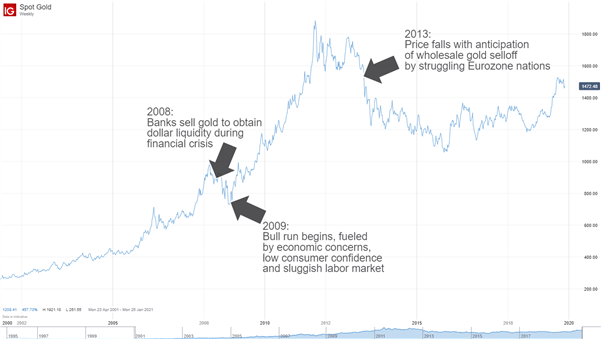
Fig 2: Gold’s performance during major crises — 2008 financial crisis, COVID-19 pandemic, and 2022 inflation surge.
Japanese Yen (JPY) — The Currency Safe Haven
The Japanese Yen is the most widely traded safe-haven currency. Its status stems from Japan’s large current account surplus and its position as a net creditor nation. During risk-off events, the Yen typically appreciates as investors unwind carry trades and seek safety. The Bank of Japan’s monetary policy, while accommodative, has not diminished the Yen’s safe-haven status.
US Treasuries — Risk-Free Government Debt
US Treasury bonds are considered the closest thing to a risk-free asset. Backed by the full faith and credit of the US government, they provide predictable income and are the most liquid bonds in the world. During market stress, investors flock to Treasuries, driving yields lower and prices higher. In 2026, with interest rates normalising, Treasuries offer attractive yields alongside their traditional safe-haven properties.
Defensive Stocks — Stability Through Essentials
Defensive stocks are shares in companies that provide essential goods and services — consumer staples, utilities, and healthcare. These companies tend to have stable earnings regardless of economic conditions, making their stocks less volatile than the broader market. Examples include McDonald’s, Procter & Gamble, Johnson & Johnson, and NextEra Energy.
Swiss Franc (CHF) — The European Safe Haven
The Swiss Franc is another major safe-haven currency, supported by Switzerland’s political neutrality, strong banking system, and fiscal prudence. During European debt crises or broader market turmoil, the CHF typically strengthens. However, the Swiss National Bank has occasionally intervened to prevent excessive appreciation, which is a risk to consider.
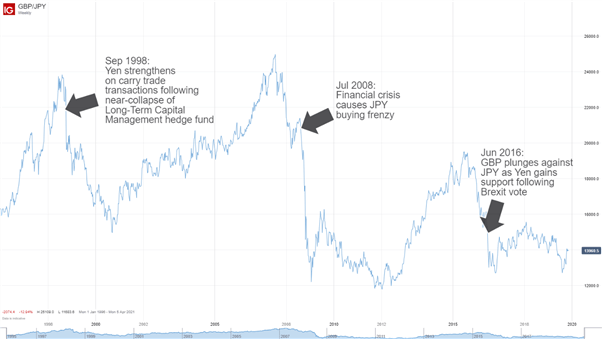
Fig 3: Safe-haven currency performance during risk-off events — JPY, CHF, and USD compared.
📌 Pro Tip: While each safe-haven asset offers unique advantages, diversification across multiple safe havens can provide more robust portfolio protection. Gold, JPY, and US Treasuries each respond differently to various risk factors, creating a more resilient hedge.
4. How to Trade Safe-Haven Assets
Trading safe-haven assets requires a different approach than trading risk assets. The key is to identify when to enter and exit positions based on market conditions and risk signals.
Entry Signals
- Rising VIX (Volatility Index): When the VIX spikes above 25, it often signals increased market fear and a potential opportunity to buy safe havens.
- Inverted Yield Curve: An inverted yield curve has historically preceded recessions, making it a strong signal to increase safe-haven allocation.
- Poor Economic Data: Weak employment numbers, declining consumer confidence, or negative GDP growth can trigger flight-to-safety moves.
- Geopolitical Tensions: Wars, trade disputes, or political instability often drive demand for safe havens.
Exit Signals
- VIX Falling Below 20: When the VIX normalises, it may be time to rotate back into risk assets.
- Improving Economic Data: Strong employment, rising consumer confidence, or positive GDP growth can signal a return to risk-on mode.
- Resolution of Geopolitical Risks: When tensions ease, demand for safe havens often subsides.
- Technical Resistance: Safe-haven assets often have clear resistance levels that can serve as take-profit targets.
Risk Management
- Use Stop-Loss Orders: Even safe havens can experience sharp corrections. Always use stop-losses to protect your capital.
- Maintain a 1:2 Risk-Reward Ratio: Aim for a minimum 1:2 risk-reward ratio on every trade.
- Combine Technical and Fundamental Analysis: Use both to confirm your trading signals and improve accuracy.
- Practice on a Demo Account: Before trading with real money, practice your strategy on a demo account.
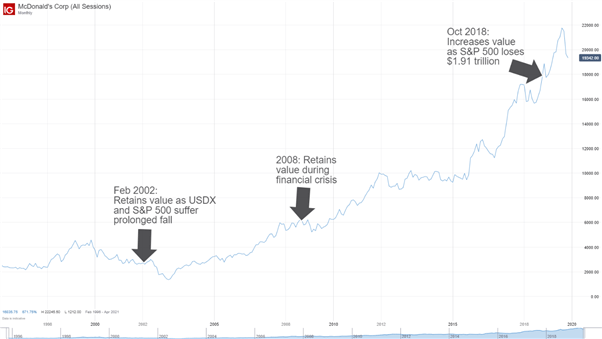
Fig 4: Safe-haven trading strategy — identifying entry signals, setting stop-losses, and targeting take-profit levels.
✅ Key Takeaway: The most successful safe-haven traders use a systematic approach — identifying clear entry signals, setting disciplined stop-losses, and exiting when risk-on conditions return. Emotional trading is the enemy of safe-haven strategy.
5. When to Move Into Safe-Haven Assets
Timing is critical when trading safe-haven assets. Moving too early can result in missed opportunities in risk assets, while moving too late can mean buying at inflated prices. Here are the key signals to watch:
- Inverted Yield Curve: When the 2-year Treasury yield exceeds the 10-year yield, it has historically preceded every US recession since the 1970s. This is one of the most reliable signals to increase safe-haven exposure.
- Declining Consumer and Business Confidence: The Conference Board’s Consumer Confidence Index and the NFIB Small Business Optimism Index are leading indicators of economic health. Sharp declines often precede economic downturns.
- Negative Employment Data: Rising unemployment claims and slowing job growth are clear signals that the economy is weakening and safe havens may be warranted.
- Geopolitical Tensions: Wars, trade disputes, and political instability in major economies can trigger flight-to-safety moves. The Russia-Ukraine conflict and tensions in the Middle East are recent examples.
- Central Bank Policy Shifts: When central banks signal a shift toward accommodative policy (rate cuts, quantitative easing), it often indicates economic weakness and supports safe-haven assets.
⚠️ Important: No single signal is foolproof. The most effective approach is to use multiple signals in combination. If the yield curve is inverted, confidence is falling, and employment is weakening, the case for safe havens is much stronger than if only one signal is present.
6. Safe-Haven Assets Comparison Table
Use this reference table to quickly understand key terms, compare different safe-haven assets, and evaluate their pros and cons.
Part 1: Key Terms & Definitions
Part 2: Asset Comparison
| Asset | Type | Liquidity | Volatility | Best For | Risk Level |
|---|---|---|---|---|---|
| Gold | Commodity | High | Moderate | Long-term hedging | Medium |
| Japanese Yen | Currency | Very High | Moderate | Currency hedging | Medium |
| US Treasuries | Bond | Very High | Low | Capital preservation | Low |
| Defensive Stocks | Equity | High | Moderate | Income + stability | Medium-Low |
| Swiss Franc | Currency | High | Moderate | Currency hedging | Medium |
Part 3: Pros and Cons
| Asset | Pros ✅ | Cons ❌ |
|---|---|---|
| Gold | Tangible asset, no counterparty risk, inflation hedge | No yield, storage costs, price can be volatile |
| Japanese Yen | High liquidity, carry trade dynamics | Susceptible to BoJ intervention |
| US Treasuries | Risk-free, predictable income, highly liquid | Low yields, interest rate sensitivity |
| Defensive Stocks | Dividends, growth potential, inflation hedge | Can still fall in severe recessions |
| Swiss Franc | Political stability, strong banking system | SNB intervention risk, negative rates |
Part 4: Quick Reference Checklist
7. Frequently Asked Questions (FAQ)
What are safe-haven assets?
Safe-haven assets are financial instruments that are expected to retain or increase in value during periods of market volatility and economic uncertainty. They provide portfolio protection and capital preservation.
What are the best safe-haven assets in 2026?
The five most reliable safe-haven assets are Gold, Japanese Yen (JPY), US Treasuries, Defensive Stocks (consumer staples, utilities, healthcare), and Swiss Franc (CHF).
Is gold still a safe haven?
Yes, gold remains the ultimate safe-haven asset. It has a proven track record of preserving value during crises and maintains a negative correlation with stocks and the US Dollar.
Are cryptocurrencies safe havens?
No, cryptocurrencies are generally considered risk assets with high volatility. They have not demonstrated the characteristics of safe-haven assets during market stress.
What is the safest currency?
The Japanese Yen and Swiss Franc are considered the safest currencies due to their countries’ strong current account positions, political stability, and deep financial markets.
How do I trade safe-haven assets?
Use technical and fundamental analysis to identify entry signals (rising VIX, inverted yield curve, poor economic data) and exit signals (falling VIX, improving data). Always use stop-losses.
When should I move into safe-haven assets?
When you see multiple signals: inverted yield curve, declining consumer confidence, negative employment data, geopolitical tensions, or central bank policy shifts toward accommodation.
Can defensive stocks protect my portfolio?
Yes, defensive stocks in consumer staples, utilities, and healthcare offer stability during downturns. They have less volatile earnings and often pay dividends, providing income even in recessions.
What is the difference between safe-haven and risk-on assets?
Safe-haven assets protect capital during uncertainty (gold, Treasuries, defensive stocks). Risk-on assets grow capital during optimism (growth stocks, emerging markets, corporate bonds).
How much of my portfolio should be in safe havens?
This depends on your risk tolerance and market conditions. A typical allocation ranges from 10-30% depending on economic signals and personal goals.
8. Conclusion: Building a Resilient Portfolio
Safe-haven assets are an essential component of a resilient investment portfolio. By understanding what they are, how they work, and when to use them, you can protect your capital during market volatility and position yourself for long-term success.
Key takeaways from this guide:
- ✅ Safe-haven assets retain or increase value during market volatility and economic uncertainty
- ✅ The top five safe havens are Gold, Japanese Yen, US Treasuries, Defensive Stocks, and Swiss Franc
- ✅ Key characteristics include high liquidity, limited supply, enduring demand, and permanence
- ✅ Entry signals include rising VIX, inverted yield curve, poor economic data, and geopolitical tensions
- ✅ Exit signals include falling VIX, improving economic data, and resolution of geopolitical risks
- ✅ Always use stop-losses and proper risk management — even safe havens can be volatile
📌 Final Advice: Safe-haven assets are not about getting rich quickly — they are about protecting what you have so you can live to trade another day. The most successful investors use safe havens as a strategic tool, not a tactical gamble. Combine them with a well-diversified portfolio, practice disciplined risk management, and stay informed about global economic conditions.
Continue your financial education — explore the guides below to deepen your understanding of trading, risk management, and portfolio protection.
📞 Need Help? Contact Us
Our support team is ready to assist you with any questions about safe-haven assets, trading strategies, or our products and services.
📌 Support Hours: Our team is available 24/5 via WhatsApp, Telegram, and Live Chat. We respond to all inquiries within 24 hours on business days.


 Signal2forex.com - Best Forex robots and signals


