
📑 Table of Contents
- 1. What Is a Forex Spread?
- 2. How to Calculate Forex Spread and Trading Costs
- 3. Types of Forex Spreads
- 4. What Does a Spread Tell Traders?
- 5. Factors That Affect Forex Spreads
- 6. Average Spreads by Currency Pair (2026)
- 7. Fixed vs Variable Spread Comparison
- 8. Forex Spread Trading Strategies
- 9. Common Mistakes to Avoid When Trading Spreads
- 10. Frequently Asked Questions
1. What Is a Forex Spread?
A forex spread is the difference between the bid price (the price at which you can sell a currency pair) and the ask price (the price at which you can buy a currency pair). It is measured in pips and represents the primary cost of entering a trade in the foreign exchange market.
Think of the spread as the broker’s fee for facilitating your trade. When you buy a currency pair, you pay the ask price. When you sell, you receive the bid price. The difference between these two prices is the spread, which is how most brokers generate revenue.
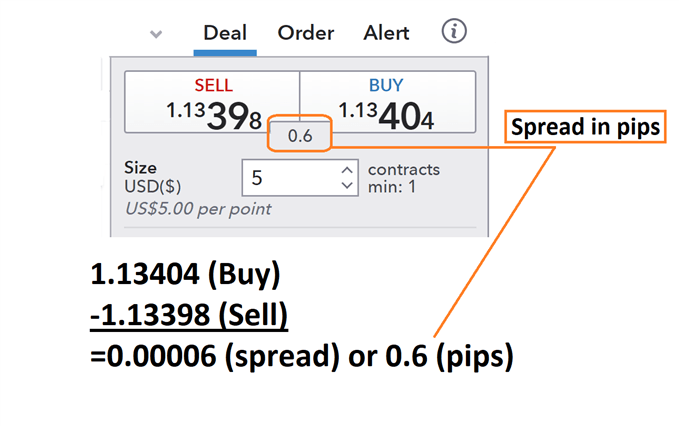
For example, if the EUR/USD is quoted at 1.13404/1.13398, the spread is 0.00006 or 0.6 pips. This means you would need the price to move 0.6 pips in your favor just to break even on the trade.
Definition and Core Concept
- Bid Price: The price at which you can sell the base currency
- Ask Price: The price at which you can buy the base currency
- Spread: The difference between bid and ask
- Pip: The smallest price movement in a currency pair
- Transaction Cost: The spread represents your cost of entering a trade
Bid Price vs Ask Price
The bid price is the highest price a buyer is willing to pay for a currency pair. The ask price is the lowest price a seller is willing to accept. The difference between these two prices is the spread. In a standard quote format, the bid is always lower than the ask.
2. How to Calculate Forex Spread and Trading Costs
Calculating the spread and its cost is essential for understanding your trading expenses and managing your profitability.
Calculating the Spread in Pips
The spread is calculated by subtracting the bid price from the ask price. The result is then converted into pips. For most currency pairs, a pip is the fourth decimal place (0.0001). For pairs involving the Japanese yen, a pip is the second decimal place (0.01).
Example: If EUR/USD is quoted at 1.13404 (ask) and 1.13398 (bid), the spread is 1.13404 − 1.13398 = 0.00006, which is 0.6 pips.
Calculating the Cost of a Spread
The cost of the spread depends on your trade size and the pip value for the currency pair you are trading.
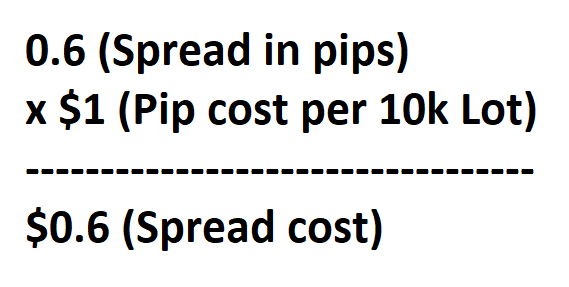
Formula: Spread Cost = Spread (in pips) × Pip Value × Trade Size (in lots)
Example: For a 10,000-unit trade (0.1 lot) on EUR/USD with a 0.6-pip spread and a pip value of $1, the spread cost is 0.6 × $1 = $0.60.
3. Types of Forex Spreads
Brokers offer different types of spreads, each with its own advantages and disadvantages. Understanding these differences is crucial for choosing the right broker and account type for your trading style.
Fixed Spreads
A fixed spread remains constant regardless of market conditions. The broker sets a fixed difference between the bid and ask prices, providing traders with predictable trading costs. Fixed spreads are typically offered by market maker brokers and are ideal for beginners who want to avoid surprises.
- Advantage: Predictable costs, no surprises
- Disadvantage: Usually wider than variable spreads
- Best For: Beginners, scalpers, and traders who prefer certainty
Variable (Floating) Spreads
A variable spread changes based on market conditions, liquidity, and volatility. During periods of high liquidity (such as major trading sessions), spreads can become very tight. During periods of low liquidity or high volatility, spreads can widen significantly.
- Advantage: Can be very tight during liquid periods
- Disadvantage: Unpredictable, can widen during news events
- Best For: Most traders, especially during active sessions
Raw Spreads (ECN Accounts)
A raw spread is the tightest possible spread, representing the interbank spread passed directly to the trader with minimal markup. Brokers offering raw spreads typically charge a fixed commission per lot traded instead of marking up the spread.
- Advantage: Tightest spreads, direct market access
- Disadvantage: Commission fees apply
- Best For: Advanced traders, high-volume traders
4. What Does a Spread Tell Traders?
Beyond being a cost of trading, the spread provides valuable insights into market conditions. Understanding what the spread tells you can improve your trading decisions.
High Spread vs Low Spread
A high spread typically indicates low liquidity, high volatility, or both. It can also occur before major news events or during out-of-hours trading. High spreads mean higher trading costs and may signal that the market is unstable.
A low spread generally indicates high liquidity and low volatility. It is preferable to trade during major forex sessions when spreads are low, as this reduces your trading costs.
Market Liquidity and Volatility Signals
Spreads widen during periods of high volatility because liquidity providers increase their spreads to offset their risk. Conversely, spreads tighten during stable, liquid markets. Monitoring spread changes can help you assess market conditions and time your trades more effectively.
News Events and Spread Widening
Spreads often widen significantly before and during major news releases (such as Non-Farm Payrolls, CPI, and central bank rate decisions). This is because liquidity providers are uncertain about the outcome and look to offset their risk. Trading during these periods can be expensive, so many experienced traders avoid entering trades just before major news events.
5. Factors That Affect Forex Spreads
The table below summarises the key factors that influence the size of forex spreads.
| Factor | Impact on Spread | Why It Happens |
|---|---|---|
| Market Liquidity | High liquidity = lower spreads | More buyers and sellers = tighter spreads |
| Market Volatility | High volatility = wider spreads | Increased risk for liquidity providers |
| Trading Session | Peak sessions = tighter spreads | More market participants |
| Currency Pair | Majors = tighter spreads | Higher trading volume |
| News Events | Before/after news = wider spreads | Uncertainty and risk |
| Broker Type | ECN = tighter spreads, commission-based | Direct market access |
📌 Understanding these factors can help you choose the best times and currency pairs to trade, minimising your trading costs.
6. Average Spreads by Currency Pair (2026)
The table below shows the average spreads for major currency pairs in 2026. These figures are based on data from leading forex brokers and represent typical spreads during normal market conditions.
| Currency Pair | Average Spread (Pips) | Spread Type |
|---|---|---|
| EUR/USD | 0.7–1.0 (standard), 0.0+ (ECN) | Tightest among majors |
| GBP/USD | 0.8–1.2 | Major pair |
| USD/JPY | 0.7–1.0 | Major pair |
| AUD/USD | 1.0–1.5 | Major pair |
| USD/CAD | 1.0–1.5 | Major pair |
| EUR/GBP | 1.5–2.0 | Cross pair |
| USD/TRY | 10.0+ | Emerging market |
📌 Major currency pairs typically offer the tightest spreads due to high trading volume and liquidity. Emerging market pairs have wider spreads due to lower liquidity.
7. Fixed vs Variable Spread Comparison
The table below compares the key features of fixed spreads, variable spreads, and raw spreads (ECN accounts) to help you choose the right account type for your trading style.
| Feature | Fixed Spread | Variable Spread | Raw Spread (ECN) |
|---|---|---|---|
| Cost Predictability | High | Low | Medium |
| Spread Size | Usually wider | Can be very tight | Tightest |
| Commission | No | No | Yes |
| Best For | Beginners, scalpers | All traders | Advanced, high-volume |
| Risk of Requotes | Higher | Lower | Lowest |
📌 Fixed spreads offer predictability but are typically wider. Raw spreads offer the tightest spreads but come with commission fees.
8. Forex Spread Trading Strategies
Minimising the impact of spreads on your trading is essential for long-term profitability. Here are proven strategies to reduce your trading costs.
Trade During High-Liquidity Sessions
Spreads are tightest during the London and New York trading sessions, when market liquidity is highest. Avoid trading during the Asian session or during holidays, when spreads tend to widen.
Focus on Major Currency Pairs
Major currency pairs like EUR/USD, GBP/USD, and USD/JPY have the highest trading volume and tightest spreads. Avoid exotic pairs or minor crosses unless necessary.
Use Limit Orders
Using limit orders instead of market orders can help you avoid paying the spread on entry. A limit order allows you to specify the price at which you want to enter, potentially getting a better fill.
Choose the Right Broker Type
If you trade frequently or with large volumes, consider a raw spread account (ECN) with a commission. The lower spreads can offset the commission costs, especially for active traders.
Avoid Trading During News Events
Spreads widen significantly before and during major news events. Unless you have a specific strategy for trading news, it’s usually best to avoid trading during these periods.
9. Common Mistakes to Avoid When Trading Spreads
Even experienced traders make mistakes when it comes to spreads. Here are the most common pitfalls and how to avoid them.
- Ignoring Spread Costs: Many traders focus only on the price movement and ignore the spread. The spread is a real cost that affects your profitability, especially for short-term trades.
- Trading During Low Liquidity: Trading during off-hours or holidays can result in wider spreads, increasing your trading costs unnecessarily.
- Using Market Orders on Wide Spreads: Market orders execute at the current ask or bid price, which includes the spread. During wide spreads, this can significantly increase your entry cost.
- Not Comparing Broker Spreads: Spreads vary significantly between brokers. Always compare spreads and commission structures before choosing a broker.
- Forgetting About Spread Wideners: News events, holidays, and low-liquidity periods can cause spreads to widen unexpectedly. Always check the economic calendar before trading.
10. Frequently Asked Questions
What is a spread in forex trading?
A forex spread is the difference between the bid price (the price at which you can sell) and the ask price (the price at which you can buy) of a currency pair. It is measured in pips and represents the primary cost of trading forex.
How is a forex spread calculated?
The spread is calculated by subtracting the bid price from the ask price. For example, if EUR/USD is quoted at 1.13404/1.13398, the spread is 0.00006 or 0.6 pips.
What is the difference between fixed and variable spreads?
A fixed spread remains constant regardless of market conditions, providing predictable costs. A variable spread changes based on market volatility and liquidity.
What does a high spread indicate?
A high spread typically indicates low liquidity, high volatility, or both. It can also occur before major news events or during out-of-hours trading.
What does a low spread indicate?
A low spread generally indicates high liquidity and low volatility. It is preferable to trade during major forex sessions when spreads are low.
How do I calculate the cost of a forex spread?
Multiply the spread in pips by the pip value for your trade size. For a 10,000-unit trade with a 0.6-pip spread on EUR/USD, the cost is $0.60.
Why do forex spreads widen during news events?
Spreads widen before and during major news releases because liquidity providers are uncertain about the outcome and look to offset their risk.
Which currency pairs have the lowest spreads?
Major currency pairs like EUR/USD, USD/JPY, and GBP/USD typically have the lowest spreads due to high trading volume and liquidity.
What is a raw spread account?
A raw spread account passes the interbank spread directly to the trader with minimal markup, charging a fixed commission per lot instead.
How can I reduce the impact of spreads on my trading?
Trade during high-liquidity sessions, focus on major currency pairs, use limit orders, and consider a raw spread account for tighter spreads.
⭐ Trusted by Traders Worldwide: See what other traders are saying about their trading experiences and tools. Read our real customer reviews — featuring honest feedback from traders who have used our Expert Advisors, indicators, and trading systems to achieve consistent results and grow their accounts.
📈 Combine Spread Knowledge with Sentiment Analysis: Understanding spreads is just the beginning. Master the IGCS indicator for short-term forex signals — learn how to use IG Client Sentiment as a contrarian indicator, identify retail trader positioning, and generate short-term trading signals that complement your spread-aware trading strategy.


 Signal2forex.com - Best Forex robots and signals


