📑 Table of Contents
- 1. What Is Leverage in Forex Trading?
- 2. How Does Leverage Work in Forex?
- 3. Leverage Ratios Explained
- 4. Leverage in Forex — Examples and Calculations
- 5. Leverage vs Margin — Key Differences
- 6. Advantages and Risks of Using Leverage
- 7. How to Choose the Right Leverage
- 8. Leverage Reference Table
- 9. Frequently Asked Questions
1. What Is Leverage in Forex Trading?
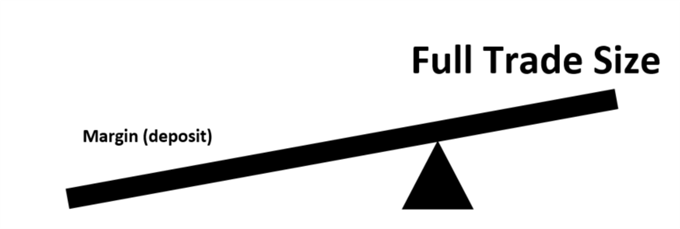
Leverage in forex is borrowed capital provided by your broker that allows you to control a larger position with a smaller amount of your own money. For example, with 1:100 leverage, you can control $100,000 with just $1,000 of your own funds. This amplification effect is what makes forex trading both attractive and risky.
Leverage is one of the most important concepts in forex trading. It is what allows traders with limited capital to participate in the forex market and potentially earn significant returns. However, leverage is a double‑edged sword — it magnifies both profits and losses, and understanding how it works is essential for any trader.
Simple Definition
Leverage is the ratio of the position size to the required margin. It is expressed as a ratio, such as 1:10, 1:50, 1:100, or 1:500. The first number represents the amount of capital you can control, and the second number represents your own capital. For example, 1:100 leverage means you can control $100 for every $1 of your own money.
Why Brokers Offer Leverage
Brokers offer leverage to make forex trading accessible to a wider range of traders. Without leverage, you would need to deposit the full value of every trade, which would make forex trading inaccessible to most retail traders. Leverage also generates revenue for brokers through spreads and commissions on larger trade volumes.
2. How Does Leverage Work in Forex?
Understanding how leverage works is essential for using it safely and effectively. Here is a step‑by‑step explanation of the mechanics of leverage.
The Mechanics of Leverage
When you open a leveraged trade, your broker lends you the capital needed to control a larger position. You are required to deposit a percentage of the total position size as collateral — this is called margin. The rest of the position is funded by the broker.
For example, with 1:100 leverage and a $100,000 position, you only need to deposit $1,000 (1% margin). The broker lends you the remaining $99,000. If the trade moves in your favour, you earn profits on the full $100,000 position. If it moves against you, you incur losses on the full position as well.
Leverage and Position Size
The relationship between leverage and position size is straightforward:
- Higher leverage = larger position size with the same deposit
- Lower leverage = smaller position size with the same deposit
For example, with a $1,000 deposit:
- 1:10 leverage → $10,000 position
- 1:100 leverage → $100,000 position
- 1:500 leverage → $500,000 position
3. Leverage Ratios Explained
The table below explains the most common leverage ratios, the required margin, and the associated risk level.
| Leverage | Required Margin % | Account Balance | Max Position Size | Risk Level |
|---|---|---|---|---|
| 1:10 | 10% | $1,000 | $10,000 | Low |
| 1:30 | 3.33% | $1,000 | $30,000 | Low-Medium |
| 1:50 | 2% | $1,000 | $50,000 | Medium |
| 1:100 | 1% | $1,000 | $100,000 | Medium-High |
| 1:200 | 0.5% | $1,000 | $200,000 | High |
| 1:500 | 0.2% | $1,000 | $500,000 | Very High |
| 1:1000 | 0.1% | $1,000 | $1,000,000 | Extreme |
📌 Higher leverage increases both profit potential and the risk of a margin call. Choose leverage that aligns with your risk tolerance and trading experience.
4. Leverage in Forex — Examples and Calculations
Seeing leverage in action with real numbers is the best way to understand how it works. Here are two detailed examples.
Example 1 — Using 1:100 Leverage
Scenario: You have a $1,000 account and use 1:100 leverage to open a $100,000 position on EUR/USD.
- Position Size: $100,000
- Required Margin: $1,000 (1% of $100,000)
- Leverage: 100:1
If EUR/USD moves 1% in your favour ($1,000), your profit is $1,000 — a 100% return on your $1,000 deposit. However, if EUR/USD moves 1% against you, your loss is also $1,000 — wiping out your entire account.
Example 2 — Impact of Leverage on Profits and Losses
Scenario: You have a $1,000 account and use different leverage ratios to open positions.
| Leverage | Position Size | 1% Move Profit/Loss | Return on Deposit |
|---|---|---|---|
| 1:10 | $10,000 | $100 | 10% |
| 1:50 | $50,000 | $500 | 50% |
| 1:100 | $100,000 | $1,000 | 100% |
| 1:500 | $500,000 | $5,000 | 500% |
📌 Higher leverage magnifies both profits and losses. A 1% move against you with 1:500 leverage can wipe out your entire account five times over.
5. Leverage vs Margin — Key Differences
Leverage and margin are often confused, but they are two sides of the same coin. The table below explains the key differences.
| Feature | Leverage | Margin |
|---|---|---|
| Definition | Borrowed capital to increase position size | Collateral required to open a leveraged position |
| Ratio | Expressed as a ratio (e.g., 1:100) | Expressed as a percentage (e.g., 1%) |
| Purpose | Amplify trading power | Secure the broker against losses |
| Risk | Magnifies both profits and losses | Risk is limited to the margin amount |
| Calculation | 1 / Margin % | 1 / Leverage |
| Example | 1:100 leverage = 1% margin required | 1% margin = 1:100 leverage |
📌 Leverage and margin are inversely related. High leverage means low margin requirement and vice versa.
6. Advantages and Risks of Using Leverage
Leverage is a powerful tool, but it comes with significant risks. Understanding both sides is essential for responsible trading.
| Advantages | Risks |
|---|---|
| Magnifies potential profits | Magnifies potential losses |
| Allows trading larger positions with limited capital | Can lead to margin calls and account wipeouts |
| Provides access to markets with small deposits | Increases emotional stress and trading pressure |
| Enables diversification across multiple positions | Requires strict risk management |
| Essential for professional trading strategies | Can amplify small price movements significantly |
📌 The key to using leverage successfully is strict risk management. Never risk more than 1-2% of your account on a single trade.
7. How to Choose the Right Leverage
Choosing the right leverage depends on your experience level, risk tolerance, and trading strategy. Here are some guidelines.
For Beginners
- Recommended leverage: 1:10 to 1:30
- Why: This limits potential losses while you are learning the basics of forex trading.
- Risk per trade: Never risk more than 1-2% of your account on a single trade.
For Experienced Traders
- Recommended leverage: 1:50 to 1:100
- Why: Experienced traders with proven strategies and strict risk management can handle higher leverage.
- Risk per trade: Still limit risk to 1-2% of your account.
Regulatory Limits by Region
Leverage limits vary by region and regulator. The table below summarises the current regulatory landscape.
| Region | Regulator | Retail Max Leverage | Professional Max Leverage |
|---|---|---|---|
| United States | CFTC/NFA | 50:1 | 50:1 |
| European Union | ESMA | 30:1 | Unlimited (with conditions) |
| United Kingdom | FCA | 30:1 | Unlimited (with conditions) |
| Australia | ASIC | 30:1 | Unlimited (with conditions) |
| Japan | FSA | 25:1 | 25:1 |
| Offshore | Various | 100:1 – 1000:1 | 100:1 – 1000:1 |
📌 Regulatory limits are subject to change. Always check with your broker for the most up‑to‑date information.
8. Leverage Reference Table
This reference table provides a quick summary of the key concepts related to leverage in forex trading.
| Concept | Formula | Explanation |
|---|---|---|
| Leverage | Position Size / Margin | Ratio of borrowed capital to your own capital |
| Margin | Position Size / Leverage | Collateral required to open a position |
| Margin % | 1 / Leverage × 100% | Percentage of position size required as margin |
| Position Size | Account Balance × Leverage | Maximum position size with full leverage |
| Profit/Loss | Position Size × Price Change | Profit or loss on the full position size |
📌 Understanding these formulas is essential for calculating your potential profits, losses, and margin requirements before entering a trade.
9. Frequently Asked Questions
What is leverage in forex trading?
Leverage in forex is borrowed capital provided by your broker that allows you to control a larger position with a smaller amount of your own money. For example, with 1:100 leverage, you can control $100,000 with just $1,000 of your own funds.
How does leverage work in forex?
Leverage works by allowing you to control a larger position size than your account balance would otherwise permit. For example, with 1:100 leverage, a $1,000 deposit gives you $100,000 of buying power. Profits and losses are calculated on the full position size.
What is a good leverage ratio for beginners?
For beginners, leverage between 1:10 and 1:30 is recommended. This limits potential losses while you are learning the basics of forex trading. Higher leverage should only be used by experienced traders with strict risk management.
What is the difference between leverage and margin?
Leverage is borrowed capital that amplifies your trading power. Margin is the collateral you must deposit to open a leveraged position. They are two sides of the same coin — high leverage means low margin requirement and vice versa.
What leverage is allowed in the US?
In the United States, the CFTC and NFA cap retail forex leverage at 50:1 for major currency pairs and 20:1 for minor pairs. Professional traders may have access to higher leverage under certain conditions.
How is leverage calculated in forex?
Leverage is calculated as the ratio of the position size to the required margin. For example, if you control $100,000 with $1,000 of margin, the leverage is 100:1. Leverage = Position Size / Margin Required.
What are the risks of using high leverage?
High leverage magnifies both profits and losses. A 1% move against you with 1:100 leverage can wipe out 100% of your account. It also increases the risk of margin calls and emotional trading decisions.
What is the maximum leverage in forex?
The maximum leverage varies by region and broker. In the EU, it is 30:1 for retail traders. In the US, it is 50:1. Offshore brokers may offer leverage up to 1000:1 or even higher.
Can I lose more money than I deposited with leverage?
In most regulated brokerages, you cannot lose more than your deposited amount due to negative balance protection. However, this is not always available with all brokers, so it is important to check the terms and conditions.
How do I choose the right leverage for my trading strategy?
Choose leverage based on your risk tolerance, account size, and trading experience. Lower leverage (1:10–1:30) is recommended for beginners. Higher leverage (1:100–1:500) should only be used by experienced traders with robust risk management.
📡 Leverage Beyond Forex — Corporate Leverage in Action: While this guide focuses on trading leverage, the concept of leverage extends far beyond forex. Explore our analysis of Dish Network’s strategic leverage — a fascinating case study of how a company used financial and strategic leverage to position itself as the fourth US wireless carrier, demonstrating that leverage is a universal business principle.
🏛️ The Regulatory Landscape of Forex Leverage: Leverage limits are constantly evolving. Read our in‑depth analysis of regulatory plans to clamp down on retail FX leverage — examining the debate between regulators (prioritising investor protection) and traders (seeking flexibility), and how these changes have shaped the leverage landscape we see today.
 Signal2forex.com - Best Forex robots and signals