
📑 Table of Contents
- 1. What Is Gold Trading (XAUUSD)?
- 2. Why Trade Gold in 2026?
- 3. Top Gold Trading Strategies
- 4. Gold Technical Analysis — Key Levels (2026)
- 5. Gold Fundamental Analysis — Key Drivers
- 6. Gold Trading Strategies Comparison
- 7. Gold Trading Risk Management
- 8. Common Mistakes in Gold Trading
- 9. Frequently Asked Questions
1. What Is Gold Trading (XAUUSD)?
Gold trading (XAUUSD) involves buying and selling contracts for difference (CFDs) on the spot price of gold, priced in US dollars. You are not buying physical gold — you are speculating on price movements through a forex or CFD broker. XAUUSD is the ticker symbol for gold against the US dollar, representing one of the most actively traded commodity pairs in the global financial markets.
Gold trading offers significant opportunities due to its high volatility, with daily price fluctuations of $200+ being common. This volatility attracts both short-term scalpers and long-term position traders. The gold market is influenced by a wide range of factors, making it a fascinating asset to trade.
2. Why Trade Gold in 2026?
2026 has been a landmark year for gold, with prices surging to record highs and experiencing significant volatility. Here is why gold trading is attracting attention this year:
Record-High Volatility
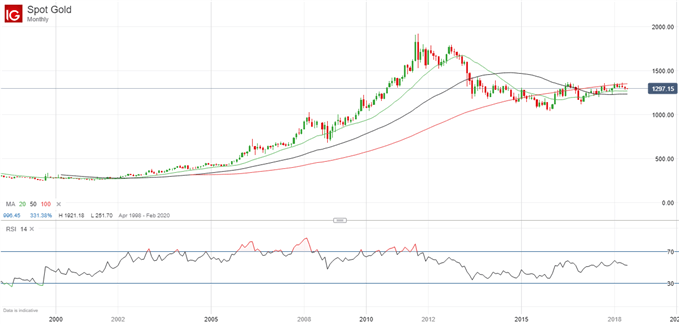
Gold has been exceptionally volatile in 2026. The price surged to an all-time high of $5,500 per ounce in January, representing a 37% gain in the first quarter alone. However, the metal then corrected sharply, falling to approximately $4,000 by June — a 27% decline. This extreme volatility creates significant trading opportunities for those who can navigate the swings.
Safe-Haven Demand
Gold’s traditional role as a safe-haven asset has been reinforced in 2026 by geopolitical tensions, including the Iran conflict and Middle East instability. Investors continue to seek refuge in gold during times of uncertainty, driving demand and supporting prices.
Diversification Benefits
Gold offers valuable diversification benefits for traders and investors. With a weak positive correlation to equities and a strong inverse correlation to the US dollar, gold can help balance portfolios and reduce overall risk.
3. Top Gold Trading Strategies
There are several effective strategies for trading gold (XAUUSD). The key is to match the strategy to the current market conditions and your trading style.
Trend Following Strategy
Trend following is one of the most popular gold trading strategies. It involves identifying the dominant trend direction and trading in that direction. In 2026, gold has shown strong trends — surging in Q1 and correcting in Q2. The strategy works as follows:
- Entry: Enter on a breakout or pullback to a key moving average (e.g., 50-day MA) with confirmation
- Stop-Loss: Place stop-loss below the recent swing low
- Take Profit: Target the next resistance level or use a trailing stop
Range Trading Strategy
When gold is consolidating, range trading can be highly effective. This strategy involves buying at support and selling at resistance within a defined range. The key is to identify clear support and resistance levels and wait for price action confirmation at those levels.
Event-Driven Strategy (FOMC, CPI)
Gold prices are particularly sensitive to US economic data and Federal Reserve policy announcements. Event-driven strategies involve positioning before major releases:
- FOMC meetings: Interest rate decisions and forward guidance
- CPI releases: Inflation data directly impacts real interest rates
- NFP reports: Employment data influences Fed policy expectations
Breakout Strategy
When gold breaks through a key resistance or support level with strong volume, it often signals a significant move. The breakout strategy involves:
- Entry: Enter on a confirmed break (daily close beyond the level)
- Stop-Loss: Place stop-loss just below the breakout level
- Take Profit: Target the next significant support or resistance level
Scalping Strategy
Gold’s high volatility makes it suitable for scalping. Scalpers aim to capture small price movements of 10–20 pips using tight stops and quick entries. This strategy requires fast execution and disciplined risk management.
4. Gold Technical Analysis — Key Levels (2026)
Understanding the key technical levels for gold is essential for identifying entry and exit points. The table below outlines the major support and resistance levels as of July 2026.
| Level Type | Price (USD/oz) | Significance |
|---|---|---|
| All-Time High | $5,500 | January 2026 peak — major resistance |
| Major Resistance | $4,700–$4,750 | Current consolidation range top |
| Major Resistance | $4,400–$4,500 | Key resistance zone |
| Current Price | ~$4,100–$4,200 | Current trading range |
| Major Support | $4,040–$4,050 | Critical support zone |
| Major Support | $3,950–$4,000 | Secondary support zone |
| Strong Support | $3,650 | Next major support level |
📌 These levels are based on current price action as of July 2026 and may shift as market conditions evolve. Always use stop-losses when trading.
5. Gold Fundamental Analysis — Key Drivers
While technical analysis provides the framework for entries and exits, understanding the fundamental drivers of gold prices is essential for long-term success.
US Dollar and Fed Policy
The US dollar and Federal Reserve policy are the most important drivers of gold prices. Gold has a strong inverse correlation with the dollar — when the dollar weakens, gold prices typically rise, and vice versa. In 2026, the Fed’s hawkish tilt has put pressure on gold, with the possibility of a rate hike in 2026 keeping the dollar supported.
Geopolitical Risks
Geopolitical tensions have been a significant driver of gold demand in 2026. The Iran conflict, Middle East instability, and other geopolitical flashpoints have increased safe-haven demand for gold, providing a floor under prices.
Central Bank Buying
Central banks around the world continue to be net buyers of gold as part of their reserve diversification strategies. This structural demand provides strong support for gold prices and is expected to continue in 2026 and beyond.
6. Gold Trading Strategies Comparison
The table below compares the main gold trading strategies, helping you choose the right approach for your trading style.
| Strategy | Market Condition | Entry Signal | Stop-Loss | Take Profit |
|---|---|---|---|---|
| Trend Following | Strong trend | Breakout or pullback to trendline | Below recent swing low | Next resistance level |
| Range Trading | Sideways | Buy at support, sell at resistance | Beyond range boundaries | Opposite side of range |
| Event-Driven | High volatility | Position before FOMC/CPI | Based on volatility | Based on expected move |
| Breakout | Volatile | Price breaks key level with volume | Below breakout level | Next support/resistance |
| Scalping | High volatility | Quick entries on momentum | Tight (5-10 pips) | Quick targets (10-20 pips) |
📌 Each strategy has its own risk-reward profile. Choose the one that aligns with your trading style and risk tolerance.
7. Gold Trading Risk Management
Gold trading can be highly profitable, but it also carries significant risks. Effective risk management is essential for long-term success:
- Position Sizing: Never risk more than 1-2% of your trading capital on a single gold trade. Gold’s high volatility means that even a small position can lead to significant losses if not managed properly.
- Stop-Loss Placement: Always use stop-loss orders. Due to gold’s volatility, place stops wider than you would for currency pairs. Consider using volatility-based stops (e.g., ATR-based) to account for gold’s dynamic price movements.
- Leverage Awareness: Gold’s daily price fluctuations of $200+ can quickly wipe out over-leveraged positions. Conservative traders should use lower leverage (e.g., 1:10 or 1:20) and always use stop-losses.
- Stay Informed: Gold prices can be affected by unexpected events — geopolitical developments, Fed policy changes, and economic data releases. Stay updated with news and economic calendars.
- Monitor the Dollar: Keep a close eye on the US Dollar Index (DXY). A strong dollar can put downward pressure on gold prices, while a weak dollar can boost them.
8. Common Mistakes in Gold Trading
Even experienced traders make mistakes when trading gold. Here are the most common pitfalls and how to avoid them.
- Ignoring the Dollar: The US dollar is gold’s primary driver. Failing to monitor the DXY can lead to unexpected losses.
- Using Too Much Leverage: Gold can be extremely volatile. Using excessive leverage can quickly wipe out an account during unexpected moves.
- Trading Without Confirmation: Entering trades on the first touch of a resistance or support level without confirmation is a common mistake. Always wait for price action confirmation.
- Overlooking Fundamental Factors: Gold is driven by more than just technicals. Ignoring interest rates, inflation, and geopolitical developments can be costly.
- Failing to Use Stop-Losses: Trading gold without stop-losses is risky. Always protect your capital with appropriate stop-loss placement.
- Chasing Breakouts: Entering a trade after a large move without waiting for a pullback can result in buying at the top.
9. Frequently Asked Questions
What is gold trading (XAUUSD)?
Gold trading (XAUUSD) involves buying and selling contracts for difference (CFDs) on the spot price of gold, priced in US dollars. You are not buying physical gold — you are speculating on price movements through a forex or CFD broker.
How do you trade gold in forex?
You trade gold in forex by opening a CFD position on XAUUSD through a broker. If you expect gold to rise, you buy (go long); if you expect it to fall, you sell (go short). Gold offers high volatility with daily price fluctuations of $200+.
What is the best gold trading strategy?
The best strategy depends on market conditions. Trend following works in strong trends, range trading works in sideways markets, and event-driven strategies work around FOMC and CPI releases.
What affects the price of gold?
Gold prices are influenced by US Federal Reserve policy, US dollar strength, geopolitical risks, inflation expectations, and central bank buying. In 2026, gold has been volatile due to a hawkish Fed and geopolitical tensions.
What is the gold price forecast for 2026?
Major banks have varying forecasts for 2026: J.P. Morgan forecasts $6,000/oz by Q4, HSBC forecasts $4,560/oz average, and Bank of America forecasts $4,360/oz average. Gold reached an all-time high of $5,500/oz in January 2026.
Is gold a good investment in 2026?
Many analysts view gold as attractive in 2026 due to geopolitical uncertainty, central bank buying, and safe-haven demand. However, gold is highly volatile — it surged to record highs in January and then corrected to ~$4,000 by June.
What is the correlation between gold and the US dollar?
Gold has a strong inverse correlation with the US dollar. When the dollar weakens, gold prices typically rise, and vice versa. This is because gold is priced in dollars.
How much leverage should I use when trading gold?
Due to gold’s high volatility, conservative traders should use lower leverage (e.g., 1:10 or 1:20) and always use stop-losses. Gold can move $200+ in a single day, which can quickly wipe out over-leveraged positions.
What is the best timeframe for gold trading?
Higher timeframes (daily, 4-hour) provide more reliable signals for swing trading. Lower timeframes (15-minute, 1-hour) can be used for scalping but require tighter risk management. The 15-minute timeframe is popular for gold strategies.
What are the risks of trading gold?
Risks include high volatility, leverage risk, geopolitical risk, and the impact of Fed policy changes. Gold’s daily price fluctuations of $200+ can lead to significant gains or losses. Always use stop-losses and proper position sizing.
📈 Master Technical Analysis: Enhance your gold trading strategy by combining price action with trendline analysis. Read our comprehensive guide to trendline analysis and drawing techniques — learn how to identify trends, draw accurate trendlines, and spot breakouts and false breaks that can significantly improve your gold trading entries and exits.
📊 Key Support and Resistance Levels for Gold: Gold’s price action is heavily influenced by key support and resistance levels. Master the art of identifying these critical zones with our complete guide to support and resistance trading — learn how to spot horizontal levels, trendlines, and psychological levels that can help you time your gold trades with greater precision.


 Signal2forex.com - Best Forex robots and signals


