
📑 Table of Contents
1. What Is Risk Management in Trading?
Risk management in trading is the process of identifying, assessing, and controlling potential losses. It is the single most important skill that separates successful traders from those who fail. Without proper risk management, even the most accurate trading strategy will eventually lead to account depletion.
At its core, risk management is about capital preservation. Professional traders understand that trading is a game of probabilities — not certainties. They focus on managing risk first, and let profits take care of themselves. The goal is not to avoid losses entirely (which is impossible), but to ensure that losses are small enough to survive and continue trading.
Effective risk management involves several key components: position sizing, stop-loss placement, risk-reward ratio management, portfolio diversification, and emotional control. Each of these elements plays a crucial role in protecting your trading capital and ensuring long-term success.
2. Why Risk Management Is Essential for Traders
The statistics are sobering: between 72% and 84.6% of retail traders lose money. While many factors contribute to these numbers, poor risk management is consistently cited as the primary reason for failure. Traders who succeed are not necessarily better at predicting market movements — they are simply better at managing risk.
The 1% Rule and Capital Preservation
The 1% rule is a cornerstone of professional risk management. It states that you should never risk more than 1% of your total trading account on any single trade. For a $10,000 account, this limits risk to $100 per trade. This rule ensures that even a string of 10 consecutive losing trades would only result in a 10% drawdown — manageable and recoverable.
The math behind the 1% rule is compelling. If you risk 2% per trade, a losing streak of 5 trades would cost you 10% of your account. A losing streak of 10 trades would cost 20%. With 1% risk, the same losing streaks would cost 5% and 10% respectively — giving you significantly more room to recover.
Statistics: Why Most Traders Fail
Research consistently shows that the majority of retail traders fail within their first year of trading. The primary reasons include:
- Oversized positions: Risking too much capital on individual trades
- No stop-losses: Letting losing trades run indefinitely
- Revenge trading: Trying to recover losses by increasing risk
- Ignoring correlation: Taking multiple positions that move in the same direction
- Emotional decision-making: Allowing fear and greed to override trading plans
3. 7 Essential Risk Management Techniques
Here are the seven most effective risk management techniques that professional traders use to protect their capital and achieve consistent profitability.
1. Position Sizing (The Foundation)
Position sizing determines how much capital to allocate to each trade. It is the most important risk management technique because it directly controls your exposure. The three main approaches are:
- Fixed Percentage: Risk a fixed percentage (e.g., 1–2%) of your account per trade
- Risk-Based Sizing: Adjust position size based on the distance to your stop-loss
- Volatility-Adjusted Sizing: Scale position size based on current market volatility
Professional traders typically use risk-based sizing because it automatically adjusts for market conditions and keeps dollar risk consistent across trades.
2. Stop-Loss Placement Strategies
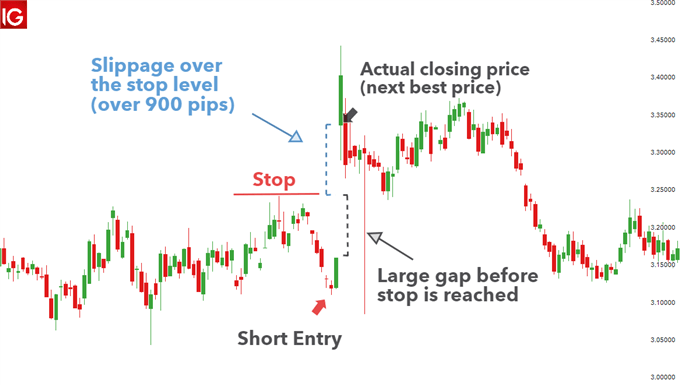
A stop-loss is an order to close a trade at a predetermined price level to limit losses. There are several types of stop-losses, each suited to different market conditions:
- Fixed Stop-Loss: Set at a specific price level below entry
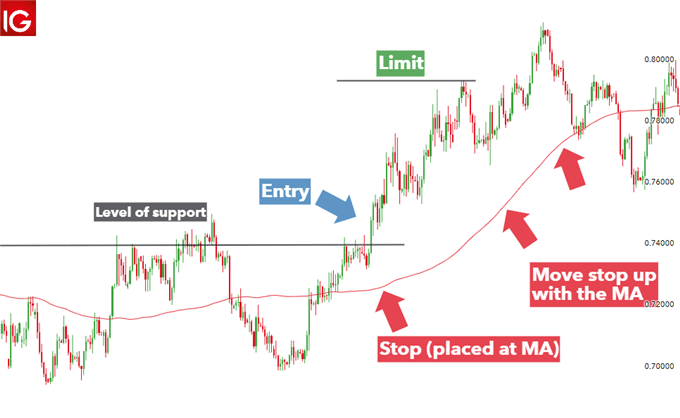
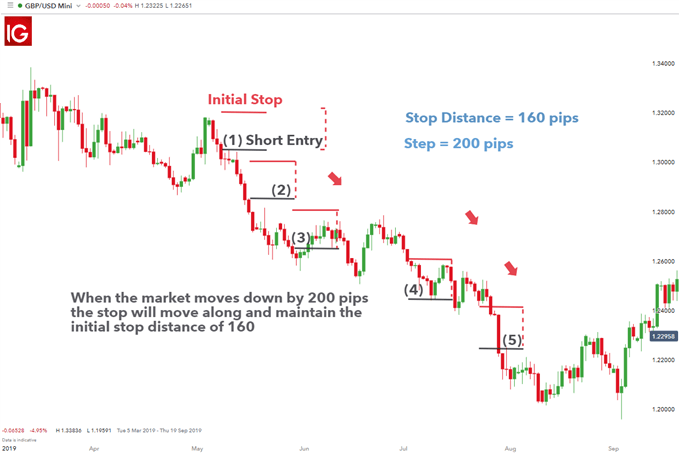
- Trailing Stop-Loss: Moves with the price as the trade becomes profitable
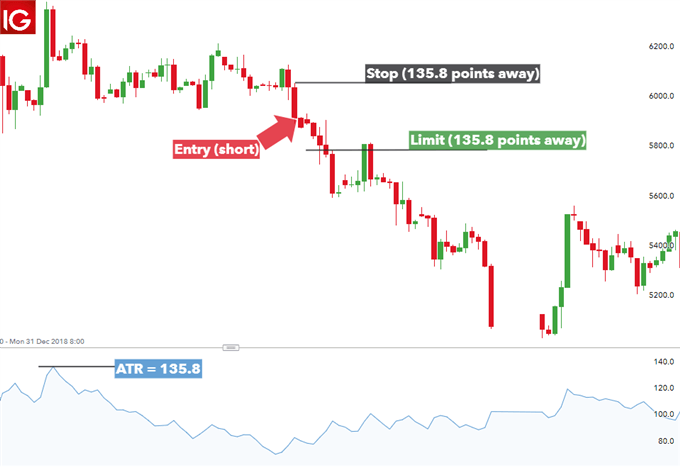
- ATR-Based Stop: Set based on the Average True Range indicator
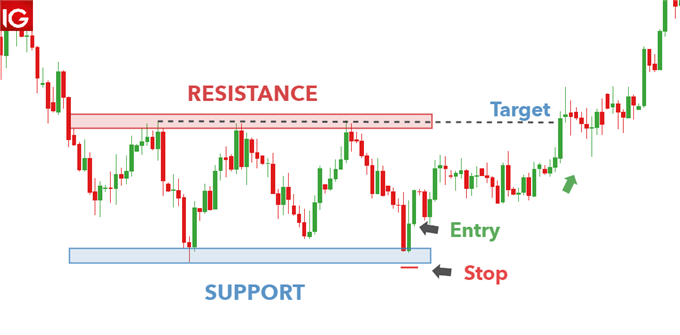
- Support/Resistance Stop: Placed below support or above resistance levels
3. Risk-Reward Ratio Management
The risk-reward ratio compares the potential profit of a trade to its potential loss. A ratio of 1:2 means you are risking $1 to make $2. Professional traders typically aim for a minimum of 1:2, with 1:3 or higher being ideal. The higher the ratio, the lower the win rate needed to be profitable.
4. Portfolio Diversification
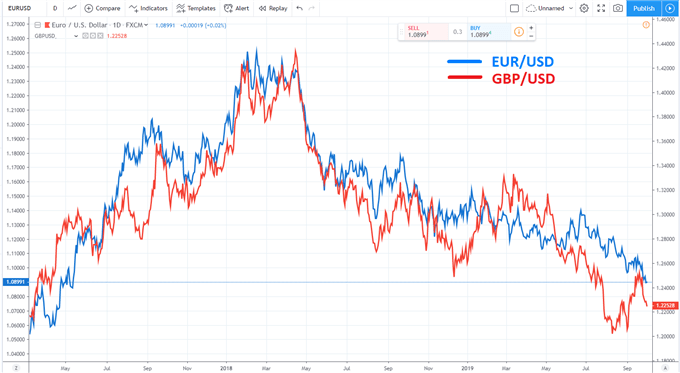
Diversification reduces risk by spreading exposure across uncorrelated assets. In forex, this means avoiding taking multiple positions in highly correlated currency pairs. For example, trading both EUR/USD and GBP/USD doubles your risk because these pairs often move together. Instead, consider trading uncorrelated pairs or different asset classes.
5. Volatility-Adjusted Position Sizing
This modern technique dynamically scales position size based on current market volatility. When volatility increases, position size decreases automatically, reducing exposure during turbulent market conditions. This approach is particularly useful for traders who want to maintain consistent risk exposure regardless of market conditions.
6. Emotional Control and Trading Psychology
Fear and greed are the biggest enemies of risk management. Greed leads to oversized positions after wins; fear leads to premature exits after losses. Successful traders maintain consistent risk rules regardless of recent performance. Key psychological principles include:
- Sticking to your trading plan regardless of emotions
- Accepting losses as a normal part of trading
- Never increasing position size after a win
- Never revenge trading after a loss
7. Risk Consistency and Discipline
Consistency is the hallmark of professional risk management. This means applying the same risk rules to every trade, regardless of how confident you feel about the setup. It also means:
- Keeping a trading journal to track performance
- Reviewing your trades regularly to identify areas for improvement
- Sticking to your risk rules even when you are on a winning streak
4. Position Sizing Methods Comparison
The table below compares the most common position sizing methods to help you choose the right approach for your trading style and risk tolerance.
| Method | Description | Best For | Risk Level |
|---|---|---|---|
| Fixed Percentage (1% Rule) | Risk fixed % of account per trade (e.g., 1–2%) | Beginners, consistent traders | Low-Medium |
| Risk-Based Sizing | Size determined by stop-loss distance | All traders, systematic approach | Low-Medium |
| Volatility-Adjusted Sizing | Size adjusts based on current market volatility | Active traders, volatile markets | Medium |
| Volatility Targeting | Risk adjusted relative to median volatility | Advanced traders | Medium |
| Kelly Criterion | Optimal bet size based on win rate and odds | Mathematical traders | High |
📌 For most traders, risk-based sizing offers the best balance of simplicity and effectiveness. It automatically adjusts position size based on stop-loss distance, keeping dollar risk consistent.
5. Stop-Loss Types Comparison
The table below compares different stop-loss types to help you choose the most appropriate method for your trading style and market conditions.
| Stop Type | How It Works | Best Use | Pros | Cons |
|---|---|---|---|---|
| Fixed Stop Loss | Fixed price level below entry | Normal market conditions | Simple, no extra cost | Slippage risk in volatile markets |
| Guaranteed Stop Loss | Broker guarantees exact stop price | Volatile markets, gaps | No slippage | Premium cost |
| Trailing Stop Loss | Moves with price on winning trades | Trending markets | Locks in profits | Can be triggered by pullbacks |
| ATR-Based Stop | Based on Average True Range | All markets | Adapts to volatility | Requires calculation |
| Support/Resistance Stop | Below support / above resistance | Range-bound markets | Logical placement | Subjective |
📌 ATR-based stops are particularly popular among professional traders because they automatically adjust to changing market conditions.
6. Risk-Reward Ratio Guide
The risk-reward ratio is one of the most important concepts in trading. It determines how much profit you need to achieve to be profitable over time. The table below shows the win rate required for different risk-reward ratios to break even.
| Risk-Reward Ratio | Win Rate Needed for Breakeven | Recommended For |
|---|---|---|
| 1:1 | 50% | High-probability setups |
| 1:1.5 | 40% | Conservative traders |
| 1:2 | 33% | Most traders |
| 1:3 | 25% | Swing traders |
| 1:4 | 20% | Position traders |
📌 Most professional traders aim for at least a 1:2 risk-reward ratio. With a 1:2 ratio, you only need to win 33% of your trades to break even — making profitability much more achievable.
7. Common Risk Management Mistakes to Avoid
Even experienced traders make mistakes when managing risk. Here are the most common pitfalls and how to avoid them.
- Risking Too Much Per Trade (Over 2%): Exceeding 2% risk per trade significantly increases the chance of account depletion. The 1% rule provides a safety buffer that allows you to survive losing streaks.
- Not Using Stop-Losses: Trading without stop-losses is gambling, not trading. Always use a stop-loss to define your maximum loss before entering a trade.
- Ignoring Correlation Between Positions: Taking multiple positions in correlated assets increases your effective risk. If you hold EUR/USD and GBP/USD, you are essentially doubling your risk on the USD.
- Increasing Position Size After Wins (Greed): This is one of the most destructive behaviours in trading. Stick to your consistent risk rules regardless of recent performance.
- Revenge Trading After Losses: Trying to recover losses by increasing risk or taking impulsive trades is a recipe for disaster. Accept losses as part of trading and stick to your plan.
8. Frequently Asked Questions
What is risk management in trading?
Risk management in trading is the process of identifying, assessing, and controlling potential losses. It involves techniques like position sizing, stop-loss placement, portfolio diversification, and emotional control to protect trading capital.
What is the 1% rule in trading?
The 1% rule means risking no more than 1% of your total trading account on any single trade. For a $10,000 account, this limits risk to $100 per trade, helping preserve capital after a series of losses.
What is position sizing in risk management?
Position sizing determines how much capital to allocate to each trade. Modern approaches include fixed percentage (1–2% per trade), volatility-adjusted sizing, and risk-based sizing where position size is determined by stop-loss distance.
What is a good risk-reward ratio?
Most traders aim for at least 1:2 (risking 1 to make 2). A 1:3 ratio means risking $1 to make $3. The higher the ratio, the lower the win rate needed to be profitable.
What is a trailing stop loss?
A trailing stop loss moves with the price as a trade becomes profitable, locking in gains while maintaining a fixed stop distance. It’s useful in trending markets to capture extended moves.
What is volatility-adjusted position sizing?
This technique dynamically scales position size based on current market volatility. When volatility increases, position size decreases automatically, reducing exposure during turbulent market conditions.
Why is diversification important in trading?
Diversification reduces risk by spreading exposure across uncorrelated assets. Trading highly correlated pairs like EUR/USD and GBP/USD doubles risk, while trading uncorrelated pairs reduces portfolio volatility.
How does trading psychology affect risk management?
Fear and greed are the biggest enemies of risk management. Greed leads to oversized positions after wins; fear leads to premature exits. Maintaining consistent risk rules helps control emotions.
What is risk-based position sizing?
Risk-based position sizing determines trade size based on the distance to the stop-loss. Larger stop distances mean smaller positions, and vice versa, keeping the dollar risk constant per trade.
What are common risk management mistakes?
Common mistakes include: risking too much per trade (over 2%), not using stop-losses, ignoring correlation between positions, increasing position size after wins (greed), and revenge trading after losses.
📊 Enhance Your Risk Management with Indicators: Browse our collection of Forex Indicators for Download — including ATR, volatility indicators, and custom oscillators designed to improve your risk management, identify optimal stop-loss levels, and help you make more informed trading decisions.
📈 Combine Risk Management with Technical Analysis: Understanding momentum is essential for risk management. Read our comprehensive guide to the Relative Strength Index (RSI) indicator — learn how to identify overbought and oversold conditions, spot divergences, and improve your entry and exit timing to complement your risk management strategy.


 Signal2forex.com - Best Forex robots and signals


