
📑 Table of Contents
- 1. What Is the Opening Range Breakout (ORB) Strategy?
- 2. How Does the Opening Range Breakout Strategy Work?
- 3. Opening Range Breakout Trading Rules
- 4. Best Timeframes for ORB Trading
- 5. Opening Range Breakout vs Breakdown
- 6. Common False Breakout Filters
- 7. Opening Range Breakout Trading Strategies
- 8. Pros and Cons of the ORB Strategy
- 9. Common Mistakes to Avoid When Trading ORB
- 10. Frequently Asked Questions
1. What Is the Opening Range Breakout (ORB) Strategy?
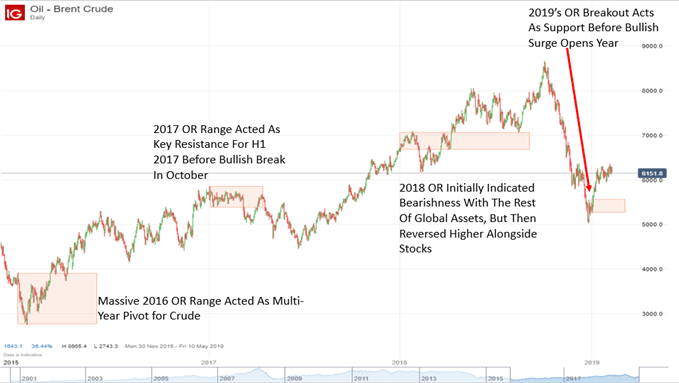
The Opening Range Breakout (ORB) strategy is a popular intraday trading strategy that defines a specific range — the high and low of the first few minutes of a trading session — and then trades breakouts above the range high or breakdowns below the range low. It is a mechanical, session-based system designed to capture the initial momentum direction immediately after the market opens.
The strategy was popularised by legendary traders Toby Crabel and Mark Fisher, who recognised that the opening range often acts as a key decision point for the rest of the session. When price breaks out of this range, it typically signals that one side has won the early battle, and momentum is likely to continue in that direction.
ORB is one of the most widely used intraday strategies because it provides clear entry and exit rules, making it suitable for both novice and experienced traders. It removes emotional decision-making and replaces it with a systematic approach to capturing early session momentum.
2. How Does the Opening Range Breakout Strategy Work?
The ORB strategy follows a simple three-step process that can be applied to any trading session.
Step 1: Define the Opening Range
The first step is to define the opening range — typically the first 5 to 30 minutes of the trading session. The most common window is the first 15 minutes. During this period, traders identify the session’s high and low. These levels become the boundaries of the opening range.
- Opening Range High: The highest price reached during the opening period
- Opening Range Low: The lowest price reached during the opening period
Step 2: Identify the Breakout Direction
Once the opening range is established, traders monitor price action for a breakout. A breakout occurs when price closes above the opening range high, signalling bullish momentum. A breakdown occurs when price closes below the opening range low, signalling bearish momentum.
Step 3: Execute the Trade
When a valid breakout or breakdown is confirmed, traders enter the trade in the direction of the break. A stop-loss is placed on the opposite side of the opening range, and profit targets are typically set as multiples of the range size — commonly referred to as 1R, 2R, and 3R targets.
3. Opening Range Breakout Trading Rules
Following a clear set of rules is essential for consistent ORB trading. Below are the key rules for entry, confirmation, stop-loss placement, and profit targets.
Entry Rules
- Long Entry: Enter when price closes above the Opening Range High
- Short Entry: Enter when price closes below the Opening Range Low
- Alternative Entry: Some traders use a buy-stop order placed just above the range high (or a sell-stop just below the range low) to enter as soon as the level is breached
Confirmation Rules
- Candle Close Confirmation: Wait for a full candle close beyond the range (not just a wick through)
- Volume Confirmation: Breakout should occur with volume above the average
- Trend Confirmation: Breakout should align with the short-term trend
Stop-Loss Placement
- Long Trades: Place stop-loss below the Opening Range Low
- Short Trades: Place stop-loss above the Opening Range High
- Alternative: Some traders use an ATR-based stop or place stops just beyond the opposite side of the range
Profit Targets (1R, 2R, 3R)
The most common approach to profit targets in ORB trading is to use multiples of the range size (R).
- 1R Target: The width of the opening range (conservative target)
- 2R Target: Twice the width of the opening range
- 3R Target: Three times the width of the opening range (aggressive target)
4. Best Timeframes for ORB Trading
The table below compares the most common trading sessions for the ORB strategy, along with their recommended opening range windows and best currency pairs.
| Trading Session | Opening Range Window | Best Currency Pairs | Key Characteristics |
|---|---|---|---|
| Tokyo Session | First 15–30 minutes | USD/JPY, AUD/JPY, NZD/JPY | Asian session liquidity; slower movement |
| London Session | First 15–30 minutes | EUR/USD, GBP/USD, USD/CHF | Highest liquidity; tight spreads; strong momentum |
| New York Session | First 15 minutes (9:30–9:45 AM ET) | EUR/USD, USD/JPY, GBP/USD | Institutional activity; strong momentum; overlap with London |
📌 The London and New York sessions offer the highest liquidity and are generally the most reliable for ORB trading.
5. Opening Range Breakout vs Breakdown
The table below explains the difference between a breakout and a breakdown, and what each signal indicates about market sentiment.
| Signal Type | Entry Condition | Direction | Market Sentiment |
|---|---|---|---|
| Breakout | Price closes above Opening Range High | Long (Buy) | Bulls have won the early session argument |
| Breakdown | Price closes below Opening Range Low | Short (Sell) | Bears have won the early session argument |
| False Breakout | Price breaks above high but returns inside range | No trade / Reversal | Rejection at resistance; potential reversal |
| False Breakdown | Price breaks below low but returns inside range | No trade / Reversal | Rejection at support; potential reversal |
📌 False breakouts and breakdowns are common in ORB trading. Using confirmation filters can help reduce their impact.
6. Common False Breakout Filters
False breakouts are one of the biggest challenges in ORB trading. The table below outlines common filters that can help distinguish genuine breakouts from fakeouts.
| Filter Type | Description | How It Helps |
|---|---|---|
| Volume Confirmation | Breakout must occur with volume above the average | Distinguishes genuine breakouts from noise |
| Trend Confirmation | Breakout must align with the short-term trend | Reduces counter-trend trades |
| Candle Close Confirmation | Price must close beyond the range (not just wick through) | Avoids false breaks on wicks |
| VWAP Filter | Price should be on the correct side of VWAP | Confirms institutional participation |
| Retest Confirmation | Price breaks out, retests the level, then continues | Confirms the level has flipped from resistance to support (or vice versa) |
📌 Using multiple filters together can significantly improve the accuracy of your ORB trades.
7. Opening Range Breakout Trading Strategies
There are several variations of the ORB strategy that traders can use depending on their risk tolerance, time availability, and market conditions.
Classic ORB Strategy
The classic ORB strategy involves defining the opening range (typically the first 15 minutes), marking the high and low, and entering on a breakout or breakdown with a stop-loss on the opposite side of the range. Profit targets are set at 1R, 2R, and 3R. This is the most straightforward approach and is suitable for traders of all experience levels.
ORB with Trend Confirmation
This variation adds a trend filter to the classic strategy. Traders only take long trades if the breakout occurs in an uptrend, and only take short trades if the breakdown occurs in a downtrend. This reduces the number of trades but increases the win rate by avoiding counter-trend breakouts.
ORB with Volume Confirmation
In this approach, traders only enter a trade if the breakout is accompanied by volume above the average. This helps filter out low-volume false breakouts that often fail.
ORB + Retest Strategy
Instead of entering on the initial breakout, traders wait for price to break out, retest the broken level, and then continue in the breakout direction. This provides a higher probability entry, though it may offer a slightly less favourable price.
8. Pros and Cons of the ORB Strategy
Like any trading strategy, the ORB strategy has its strengths and weaknesses. Understanding these can help you decide if it is the right approach for your trading style.
✅ Pros
- Mechanical and Disciplined: Clear entry and exit rules remove emotional decision-making
- Captures Early Momentum: Designed to catch the initial direction of the session
- Clear Risk Management: Stop-loss placement is defined by the opening range
- Works Across Multiple Markets: Can be applied to forex, indices, and commodities
- Suitable for Beginners: Simple rules make it easy to learn and implement
❌ Cons
- False Breakouts: Can be frequent, especially in choppy markets
- Requires Monitoring: Needs attention during the opening period
- Not Suitable for All Sessions: Works best during high-liquidity sessions
- Can Be Choppy: In range-bound markets, the strategy can generate multiple false signals
9. Common Mistakes to Avoid When Trading ORB
Even experienced traders make mistakes when using the ORB strategy. Here are the most common pitfalls and how to avoid them.
- Using Too Short an Opening Range: A 5-minute range can be too noisy. The 15-minute range is generally more reliable.
- Ignoring Confirmation: Entering on the first touch of the range without waiting for a close beyond it increases the risk of false breakouts.
- Ignoring Volume: A breakout on low volume is more likely to fail. Always check volume before entering.
- Overtrading: Not every session produces a valid breakout. Be patient and only trade when conditions are favourable.
- Placing Stops Too Tight: Placing stops too close to the range can result in being stopped out by normal market noise.
- Failing to Adjust to Market Conditions: The ORB strategy works best in trending markets. In choppy or range-bound markets, it may generate many false signals.
10. Frequently Asked Questions
What is the Opening Range Breakout (ORB) strategy?
The Opening Range Breakout (ORB) strategy is an intraday trading strategy that defines the high and low of the first 5–30 minutes of a trading session and then trades breakouts above the high or breakdowns below the low.
How does the ORB strategy work in forex?
In forex, traders mark the high and low of the opening range (typically the first 15 minutes of a session). When price closes above the range high, they enter long. When price closes below the range low, they enter short.
What is the best timeframe for the ORB strategy?
The most common timeframe is the first 15 minutes after the session opens. For the New York session, this is 9:30–9:45 AM ET. Other sessions include London (first 15–30 minutes) and Tokyo (first 15–30 minutes).
What is the difference between a breakout and a breakdown?
A breakout occurs when price moves above the opening range high, indicating bullish momentum. A breakdown occurs when price moves below the opening range low, indicating bearish momentum.
What is a false breakout in ORB trading?
A false breakout occurs when price briefly breaks above the opening range high (or below the low) but then reverses and returns inside the range. These are often signaled by “FAIL” conditions.
What are the typical profit targets in ORB trading?
Profit targets are typically set as multiples of the opening range size: 1R (the range width), 2R, and 3R. The first target is often the most conservative and most likely to be hit.
How do I confirm an ORB breakout?
Confirmation typically requires a full candle close beyond the range (not just a wick through). Additional filters include volume confirmation and alignment with the short-term trend.
What is a retest in ORB trading?
A retest occurs when price breaks out of the opening range, then pulls back to the broken level, and continues in the breakout direction. This provides a second entry opportunity.
Who popularized the ORB strategy?
The ORB strategy was popularized by traders Toby Crabel and Mark Fisher.
What are the main advantages of the ORB strategy?
The ORB strategy is mechanical, disciplined, and captures early session momentum without requiring predictions. It provides clear entry and exit rules, making it suitable for beginners.
📈 Combine Breakouts with Reversal Signals: Enhance your ORB strategy by combining it with powerful reversal patterns. Master the piercing line pattern — a bullish reversal signal that can help you identify high-probability entry points when price retests the opening range after a breakout.
⚡ Execute Your ORB Trades with Precision: For traders looking to automate their ORB execution and achieve best execution, explore FX execution management systems — learn how EMS platforms use smart order routing, algorithmic execution, and TCA analytics to optimize trade execution and minimize slippage.


 Signal2forex.com - Best Forex robots and signals


