
📑 Table of Contents
- 1. What Is a Margin Call in Forex Trading?
- 2. How Does a Margin Call Work?
- 3. Why Do Margin Calls Happen?
- 4. Margin Call vs Stop Out — Key Differences
- 5. How to Calculate Margin Levels (with Example)
- 6. Real-World Margin Call Example
- 7. 7 Proven Strategies to Avoid Margin Calls
- 8. The Role of Leverage in Margin Calls
- 9. Margin Call Reference Table
- 10. Frequently Asked Questions
1. What Is a Margin Call in Forex Trading?
A margin call in forex is a warning from your broker that your account’s margin level has fallen below the minimum required. It occurs when your open positions are losing money and your equity is no longer sufficient to cover the required margin. When this happens, you must deposit additional funds or close some positions to protect your account from forced liquidation.
Understanding margin calls is essential for every forex trader. Without proper risk management, a margin call can wipe out your account in a matter of minutes. This guide will explain everything you need to know about margin calls — from how they work to proven strategies for avoiding them entirely.
Simple Definition
A margin call is a notification from your broker that your margin level has dropped below the required threshold. It is a warning that your trading account is at risk and that you need to take immediate action — either by depositing more funds or closing losing positions.
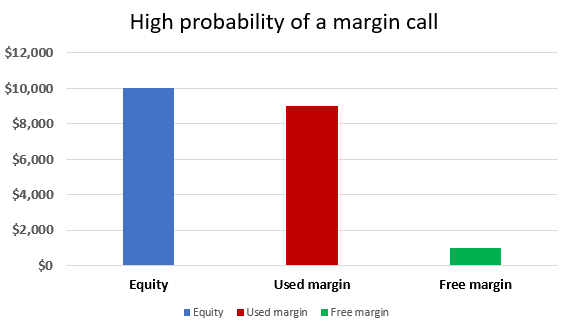
Key Terminology — Margin, Free Margin, Margin Level
- Margin: The amount of money required to open and maintain a leveraged position. It is calculated as Trade Size / Leverage.
- Free Margin: The amount of available funds in your account that can be used to open new trades. Free Margin = Equity − Used Margin.
- Margin Level: The ratio of Equity to Used Margin, expressed as a percentage. Margin Level = (Equity / Used Margin) × 100%. A healthy margin level is typically above 100%.
2. How Does a Margin Call Work?
Understanding the mechanics of a margin call is crucial for protecting your trading account. Here is the step-by-step process of how a margin call is triggered and what happens next.
The Step-by-Step Process
- You Open a Position: You open a leveraged trade using margin provided by your broker.
- The Trade Moves Against You: If the market moves in the opposite direction, your floating loss increases, reducing your equity.
- Your Margin Level Declines: As your equity decreases, your margin level (Equity / Used Margin) falls below the broker’s required threshold.
- The Margin Call Is Triggered: Your broker issues a margin call notification — typically via email, SMS, or a pop-up alert in your trading platform.
- You Must Act: You have a limited time to either deposit additional funds or close some of your open positions to restore your margin level.
- Stop Out (If No Action Taken): If you fail to act and your margin level falls to the stop-out level, the broker will automatically close your positions to prevent further losses.
Margin Level Calculation Formula
The margin level is calculated using the following formula:
Margin Level = (Equity / Used Margin) × 100%
- Equity: Balance + Floating Profit/Loss
- Used Margin: The total margin required for all open positions
- Free Margin: Equity − Used Margin
For example, if your equity is $1,000 and your used margin is $500, your margin level is ($1,000 / $500) × 100% = 200%. This is a healthy margin level. If your equity drops to $400, your margin level becomes ($400 / $500) × 100% = 80%, which would trigger a margin call at most brokers.
3. Why Do Margin Calls Happen?
Margin calls occur when your trading account no longer has enough equity to maintain your open positions. Understanding the root causes can help you avoid them entirely.
5 Common Causes of Margin Calls
- 1. Trading Too Large Positions: Opening positions that are too large relative to your account size is the most common cause of margin calls. Even a small adverse price movement can quickly erode your equity.
- 2. Using Excessive Leverage: High leverage magnifies both profits and losses. While it can increase returns, it also increases the risk of a margin call.
- 3. Rapid Adverse Price Movements: Unexpected market events, such as economic data releases or geopolitical shocks, can cause sharp price movements that trigger margin calls.
- 4. Not Using Stop-Loss Orders: Trading without stop-loss orders leaves your account exposed to unlimited losses. A single adverse move can wipe out your account.
- 5. Trading During High-Impact News Events: News events can cause extreme volatility and sharp price movements. Trading during these periods increases the risk of margin calls.
Understanding Margin Requirements
Margin requirements vary by broker, region, and asset class. In the US, the CFTC/NFA caps leverage at 50:1 (2% margin) for major currency pairs. In the EU and UK, ESMA and FCA cap leverage at 30:1 (3.33% margin) for retail clients. Some offshore brokers offer up to 500:1 (0.2% margin). The lower the margin requirement, the higher the leverage — and the higher the risk of a margin call.
4. Margin Call vs Stop Out — Key Differences
Many traders confuse margin calls with stop outs, but they are distinct events. The table below summarises the key differences.
| Feature | Margin Call | Stop Out |
|---|---|---|
| Definition | Warning that margin level has dropped below the minimum required | Automatic closure of positions when margin level is critically low |
| Action | Notification to deposit funds or close positions | Automatic position closure by the broker |
| Trader Response | Can take action to avoid further losses | No action possible — broker acts automatically |
| Typical Margin Level | 80-100% (varies by broker) | 20-50% (varies by broker) |
| Outcome | Account remains open if action taken | Positions are closed to protect account |
| Severity | Warning only | Position closure |
| Goal | Alert the trader | Protect broker and remaining account equity |
📌 A margin call gives you a chance to act and save your account. A stop out is automatic and can result in significant losses if you are not prepared.
5. How to Calculate Margin Levels (with Example)
Calculating your margin level is essential for monitoring your account health and avoiding margin calls. Here is a step-by-step example using real numbers.
Margin Calculation Formula
Margin = Trade Size / Leverage
For example, with a $10,000 position and 1:100 leverage, the required margin is $10,000 / 100 = $100.
Step-by-Step Example (Real Numbers)
Scenario: You have a $1,000 account. You open a position with a trade size of $10,000 using 1:100 leverage. The required margin is $100 (10,000 / 100). Your used margin is $100.
- Initial Equity: $1,000
- Used Margin: $100
- Margin Level: ($1,000 / $100) × 100% = 1,000% (healthy)
Scenario: The trade moves against you by 5%, resulting in a floating loss of $500.
- New Equity: $500 ($1,000 − $500)
- Used Margin: $100 (unchanged)
- Margin Level: ($500 / $100) × 100% = 500% (still healthy)
Scenario: The trade moves against you by 15%, resulting in a floating loss of $1,500.
- New Equity: $500 ($1,000 − $1,500 = −$500, but equity cannot go negative; it is reduced to $500)
- Used Margin: $100
- Margin Level: ($500 / $100) × 100% = 500%
Scenario: The trade moves against you by 20%, resulting in a floating loss of $2,000.
- New Equity: $0 (account is wiped out)
- Used Margin: $100
- Margin Level: ($0 / $100) × 100% = 0% (margin call triggered)
Conclusion: As the trade moved against you, your equity decreased, and your margin level fell. When it dropped below the broker’s threshold, a margin call was triggered. By understanding this calculation, you can better manage your risk and avoid margin calls.
6. Real-World Margin Call Example
Seeing a margin call play out in a real-world scenario can help you understand the risks and prepare for them.
Scenario Setup
You have a $5,000 trading account with a broker that offers 1:100 leverage. You decide to trade EURUSD, opening a position with a trade size of $50,000 (0.5 lots). The required margin is $500 ($50,000 / 100). Your used margin is $500.
- Account Balance: $5,000
- Used Margin: $500
- Free Margin: $4,500
- Margin Level: (5,000 / 500) × 100% = 1,000%
You set your stop-loss at 50 pips. However, a surprise economic announcement causes EURUSD to drop sharply by 150 pips before you can react.
What Happens When a Margin Call Is Triggered
After the 150-pip drop, your floating loss is $750 (150 pips × $5 per pip for a 0.5 lot position).
- New Equity: $4,250 ($5,000 − $750)
- Used Margin: $500
- Margin Level: ($4,250 / $500) × 100% = 850%
Your margin level is now 850%, which is still above the typical margin call level of 100%. However, if the market continues to move against you, your margin level will continue to fall.
Suppose the market drops another 200 pips. Your floating loss increases by $1,000, bringing your total loss to $1,750.
- New Equity: $3,250 ($5,000 − $1,750)
- Used Margin: $500
- Margin Level: ($3,250 / $500) × 100% = 650%
Your margin level continues to fall. If it drops below 100%, a margin call is triggered. If it drops to 50% (the stop-out level), your broker will automatically close your position to protect the remaining equity.
Key Takeaway: In this scenario, you lost $1,750 because you did not use a stop-loss order and your position size was too large relative to your account size. Using a smaller position size and a stop-loss could have prevented this loss entirely.
7. 7 Proven Strategies to Avoid Margin Calls
Preventing margin calls is far better than dealing with their consequences. Here are seven proven strategies to protect your account.
1. Use Lower Leverage
High leverage amplifies both profits and losses. For beginners, using leverage between 1:10 and 1:50 is recommended. This reduces the risk of a margin call while still providing sufficient trading power.
2. Set Realistic Position Sizes
Never risk more than 1-2% of your account on a single trade. If your account is $1,000, your maximum risk per trade should be $10–$20. Use a position size calculator to determine the correct lot size based on your stop-loss distance and account size.
3. Always Use Stop-Loss Orders
Stop-loss orders are your first line of defence against margin calls. They automatically close your position when the market moves against you by a predetermined amount. Without a stop-loss, your losses can spiral out of control.
4. Monitor Your Margin Level Regularly
Keep an eye on your margin level throughout the trading day. Most trading platforms display your margin level in real-time. If you see it falling below 200%, consider reducing your exposure or closing some positions.
5. Avoid Trading During High-Impact News Events
News events can cause extreme volatility and sharp price movements. If you are not prepared for the volatility, it is best to stay out of the market during these periods. Check the economic calendar before placing any trades.
6. Keep Extra Funds in Your Account
Maintaining a buffer of extra funds in your account can help absorb temporary losses and prevent margin calls. If your account balance drops below a certain threshold, consider depositing additional funds to maintain a healthy margin level.
7. Use a Reliable Forex VPS
A Virtual Private Server (VPS) ensures that your trading platform remains online 24/5, even if your computer crashes or your internet connection fails. This is particularly important if you use automated trading systems or need to monitor your positions constantly.
8. The Role of Leverage in Margin Calls
Leverage is a double-edged sword. While it can magnify your profits, it can also magnify your losses and increase the risk of a margin call.
How Leverage Magnifies Risk
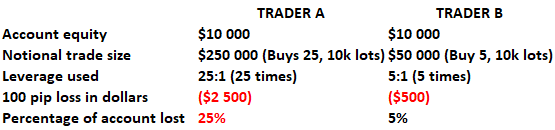
Leverage allows you to control a large position with a small amount of capital. For example, with 1:100 leverage, you can control a $100,000 position with just $1,000 of margin. However, a 1% move against you would result in a $1,000 loss — wiping out your entire account.
The higher the leverage, the smaller the adverse move required to trigger a margin call. At 1:500 leverage, a 0.2% move against you could be enough to wipe out your account.
Recommended Leverage Levels for Beginners
- Beginners: 1:10 to 1:50 — This provides a buffer for learning without excessive risk.
- Intermediate: 1:50 to 1:100 — Suitable for traders who understand risk management.
- Advanced: 1:100 to 1:200 — Only for experienced traders with proven strategies.
- Avoid: 1:200+ — Extremely risky and should only be used by professionals with tight risk controls.
Remember, the best leverage is the lowest leverage that still allows you to achieve your trading goals. Prioritise capital preservation over maximum returns.
9. Margin Call Reference Table
This reference table provides a quick overview of the key concepts related to margin calls.
| Concept | Formula | Explanation |
|---|---|---|
| Margin | Trade Size / Leverage | The amount required to open a trade |
| Used Margin | Sum of all position margins | Total margin currently in use |
| Equity | Balance + Floating P/L | Account value including unrealised profits/losses |
| Free Margin | Equity − Used Margin | Available funds for new trades |
| Margin Level | (Equity / Used Margin) × 100% | Percentage indicating account health |
| Margin Call Level | 80-100% (broker-dependent) | Threshold triggering margin call |
| Stop Out Level | 20-50% (broker-dependent) | Threshold triggering automatic closure |
📌 Margin call and stop-out levels vary by broker. Always check your broker’s specific requirements to avoid surprises.
| Leverage | Required Margin % | Account Size | Max Trade Size |
|---|---|---|---|
| 1:10 | 10% | $1,000 | $10,000 |
| 1:50 | 2% | $1,000 | $50,000 |
| 1:100 | 1% | $1,000 | $100,000 |
| 1:200 | 0.5% | $1,000 | $200,000 |
| 1:500 | 0.2% | $1,000 | $500,000 |
| 1:1000 | 0.1% | $1,000 | $1,000,000 |
📌 Higher leverage increases both profit potential and the risk of a margin call. Choose leverage that aligns with your risk tolerance.
10. Frequently Asked Questions
What is a margin call in forex trading?
A margin call in forex is a warning from your broker that your margin level has fallen below the required minimum. It indicates that your open positions are at risk and you need to deposit additional funds or close some positions to protect your account.
How does a margin call work?
When your margin level drops below the broker’s requirement (typically 80-100%), you receive a margin call notification. You must then either deposit more funds or close positions to restore the margin level. If you fail to act, the broker may close your positions automatically (stop out).
What is the difference between a margin call and a stop out?
A margin call is a warning that your margin level is low. A stop out is the actual closure of your positions by the broker when your margin level falls to a critical level (typically 20-50%). A margin call gives you a chance to act, while a stop out is automatic.
How do I calculate margin in forex?
Margin = Trade Size / Leverage. For example, with a $10,000 position and 1:100 leverage, the required margin is $10,000 / 100 = $100.
What is margin level?
Margin level = (Equity / Used Margin) × 100%. It indicates the health of your account. A margin level above 100% means you have free margin to open new trades. Below 100% means you’re in a margin call situation.
What causes a margin call in forex?
Margin calls are caused by: 1) Trading too large positions relative to account size, 2) Using excessive leverage, 3) Rapid adverse price movements, 4) Not using stop-loss orders, 5) Trading during high-impact news events.
How can I avoid a margin call?
To avoid margin calls: 1) Use lower leverage (1:10–1:50 for beginners), 2) Set realistic position sizes, 3) Always use stop-loss orders, 4) Monitor your margin level regularly, 5) Avoid trading during news events, 6) Keep extra funds in your account, 7) Use a reliable VPS.
What happens when a margin call is triggered?
When a margin call is triggered, your broker will notify you that your margin level is too low. You have a limited time to either deposit more funds or close some positions. If you don’t act, the broker may initiate a stop out and close your positions automatically.
What is the formula for margin call level?
Margin call level is typically set by the broker and can be calculated as: Margin Call Level = (Equity / Used Margin) × 100%. When this percentage falls below the broker’s threshold (usually 80-100%), a margin call is triggered.
Can I trade after a margin call?
Yes, you can continue trading after resolving a margin call by depositing additional funds or closing positions to restore your margin level above the required minimum. However, it’s important to review your risk management strategy to prevent it from happening again.
🛡️ Protect Your Portfolio Beyond Margin Management: While understanding margin calls is essential for risk management, diversifying into safe-haven assets can provide an additional layer of protection during market turmoil. Gold, the Japanese Yen, and the US Dollar have historically retained value during crises, helping traders preserve capital when their primary currency positions are under pressure.
📊 Master the Fundamentals of Margin: A margin call is often the result of misunderstanding how margin works in the first place. Our comprehensive guide on using margin in forex trading covers everything from the basics of margin requirements and leverage ratios to calculating margin levels and avoiding the common pitfalls that lead to margin calls.


 Signal2forex.com - Best Forex robots and signals


