
📑 Table of Contents
- 1. What Is Forex Rollover?
- 2. How Does Forex Rollover Work?
- 3. Forex Rollover Time — When Does It Happen?
- 4. How Are Rollover Rates Calculated?
- 5. Positive vs Negative Rollover
- 6. What Is Triple Swap?
- 7. Forex Rollover and Carry Trade Strategy
- 8. How to Avoid or Minimise Rollover Fees
- 9. Forex Rollover Reference Table
- 10. Frequently Asked Questions
1. What Is Forex Rollover?
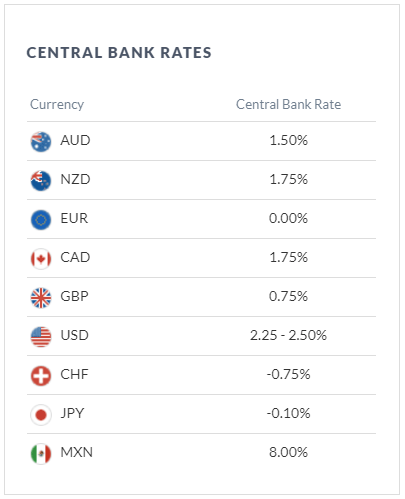
Forex rollover is the process of extending the settlement date of an open currency position to the next trading day. It involves automatically closing a position at the end of the trading day and reopening it at the new rate, with an interest adjustment (swap) applied to your account based on the interest rate differential between the two currencies in the pair.
Rollover is an essential concept for any trader who holds positions overnight. When you keep a forex position open past the daily cut‑off time (typically 5 PM EST), your broker automatically rolls it over to the next day’s value date. This process includes a financing adjustment — you either earn or pay interest depending on the interest rate differential between the two currencies.
Understanding rollover is crucial for managing trading costs, especially for longer‑term positions. Positive rollover can add to your profits, while negative rollover can eat into them. This guide will explain everything you need to know about forex rollover — from how it works to strategies for managing overnight fees.
Simple Definition
Rollover is the interest paid or earned for holding a forex position overnight. It is calculated based on the interest rate differential between the two currencies in the pair. If you buy a currency with a higher interest rate than the one you sell, you earn positive rollover. If the opposite is true, you pay negative rollover.
Why Rollover Exists — The T+2 Settlement Convention
Forex trades settle on a T+2 basis — two business days after the trade date. When you hold a position overnight, the original trade’s settlement date is extended to the next business day. The rollover adjusts for the interest rate differential between the two currencies during that extra day.
Without rollover, traders would have to physically settle every trade after two days, which is impractical for most retail traders. Rollover allows traders to hold positions indefinitely while accounting for the cost of money.
2. How Does Forex Rollover Work?
Understanding the mechanics of rollover is essential for managing your trading costs effectively. Here is a step‑by‑step explanation of how rollover works.
The Mechanics of Rollover
At the daily rollover time (typically 5 PM EST), your broker automatically performs the following steps:
- Your open position is closed at the current spot price.
- A new position is opened at the same price, with the value date moved forward by one business day.
- An interest adjustment (swap) is applied to your account, reflecting the interest rate differential between the two currencies.
From the trader’s perspective, the position appears unchanged — the price and size remain the same. However, the rollover adjustment is credited or debited to your account balance.
The Two Components of Rollover
Rollover consists of two main components:
- Tom/Next Swap Points: The forward price adjustment that reflects the interest rate differential between the two currencies. This is based on the forward points quoted by the interbank market.
- Financing Interest: The actual interest cost or credit calculated from the swap points and the position size. This is what appears as a credit or debit on your account.
Your broker’s swap rate is typically the interbank swap rate plus a small markup, which is how brokers generate revenue from rollover.
3. Forex Rollover Time — When Does It Happen?
Knowing the exact rollover time is essential for managing your positions and avoiding unexpected swap charges. Here is everything you need to know about rollover timing.
Standard Rollover Time (5 PM EST)
The standard forex rollover time is 5:00 PM Eastern Time (EST/EDT). This is when the New York trading session ends and the global forex market transitions to the next trading day. Any position held open past this time is subject to rollover.
This time was chosen because 5 PM EST marks the official close of the trading day in the forex market. The interbank market uses this cut‑off to determine the next day’s value date.
Rollover Time in Different Time Zones
The table below shows the rollover time in different time zones around the world.
| Time Zone | Rollover Time | Notes |
|---|---|---|
| Eastern Time (EST/EDT) | 5:00 PM | Standard industry rollover time |
| GMT/UTC (Winter) | 10:00 PM | 5 PM EST = 10 PM GMT |
| GMT/UTC (Summer) | 9:00 PM | During daylight saving time |
| MetaTrader Server | 00:00 (server time) | Typically GMT+2 or GMT+3 |
| Central European Time | 11:00 PM | 5 PM EST = 11 PM CET |
| Sydney Time (AEST) | 8:00 AM (next day) | During standard time |
📌 Always check your broker’s server time, as it may differ from your local time. The rollover is applied at the broker’s server cut‑off time.
MetaTrader Server Time vs Broker Time
In MetaTrader (MT4/MT5), the rollover typically occurs at 00:00 server time, which is usually set to GMT+2 or GMT+3 depending on the broker and daylight saving time. This means the rollover may not align with 5 PM EST in your local time.
Tip: Always check your broker’s server time in the MT4/MT5 terminal (displayed in the top‑right corner) to know exactly when rollover will occur for your account.
4. How Are Rollover Rates Calculated?
Understanding how rollover rates are calculated helps you anticipate the cost or credit of holding positions overnight. Here is the formula and an example.
The Interest Rate Differential Formula
Rollover rates are calculated using the following formula:
Rollover = (Position Size × (Interest Rate Differential) × (Days)) / 365
- Position Size: The notional value of your trade (e.g., $100,000 for 1 standard lot).
- Interest Rate Differential: The difference between the interest rates of the two currencies in the pair.
- Days: Typically 1 day, except for triple swap days (Wednesday) where 3 days are charged.
The broker also adds a small markup to the interbank swap rate, which is how brokers earn revenue from rollover.
Example Calculation — Long EUR/USD
Scenario: You are long 1 standard lot (100,000 EUR) on EUR/USD. The current interest rates are:
- EUR (base currency): 2.50% (ECB rate)
- USD (quote currency): 3.75% (Fed rate)
The interest rate differential is 2.50% − 3.75% = −1.25%. Because you are buying the lower‑yielding currency (EUR) and selling the higher‑yielding currency (USD), you will pay negative rollover.
Calculation:
- Position Size: 100,000 EUR
- Differential: −1.25%
- Daily Rollover: (100,000 × −1.25%) / 365 = −$3.42 per day
This means you would pay approximately $3.42 per day to hold this position overnight. On Wednesday, you would pay three times this amount ($10.26) due to triple swap.
Note: Actual swap rates vary by broker. Always check your broker’s swap rates in the MT4/MT5 terminal before holding positions overnight.
5. Positive vs Negative Rollover
Rollover can be either positive or negative depending on the interest rate differential between the two currencies in your trade. The table below explains the key differences.
| Aspect | Positive Rollover | Negative Rollover |
|---|---|---|
| Definition | You earn interest on your position | You pay interest on your position |
| When It Occurs | When you buy a currency with higher interest rate than the one you sell | When you buy a currency with lower interest rate than the one you sell |
| Account Impact | Credit added to your account | Debit deducted from your account |
| Trading Strategy | Carry trade — hold positions to earn interest | Avoid holding overnight or close before rollover |
| Example | Long AUD/USD (AUD 4.10% vs USD 3.75%) | Short AUD/USD |
📌 Positive rollover can be a significant source of profit for carry traders, while negative rollover is a cost that should be factored into your trading strategy.
6. What Is Triple Swap?
Triple swap, also known as triple rollover, is when three days’ worth of rollover interest is charged on a single day. For forex, this typically happens on Wednesday to account for the weekend (Saturday and Sunday) when markets are closed but positions remain open.
Why Wednesday Is Triple Swap Day
Forex trades settle on a T+2 basis. When you hold a position past Wednesday’s rollover, the settlement date moves forward by three days (Wednesday → Thursday → Friday → Monday), covering the weekend. As a result, you are charged three days of rollover interest on Wednesday night.
Here is the sequence:
- Monday night: 1 day of rollover (Monday to Tuesday)
- Tuesday night: 1 day of rollover (Tuesday to Wednesday)
- Wednesday night: 3 days of rollover (Wednesday to Monday, covering weekend)
- Thursday night: 1 day of rollover (Thursday to Friday)
- Friday night: 1 day of rollover (Friday to Monday)
Triple Swap for Different Instruments
The triple swap day varies by instrument:
| Instrument | Triple Swap Day | Reason |
|---|---|---|
| Forex (Spot FX) | Wednesday | T+2 settlement means Wednesday trades settle Friday; holding over Wednesday covers weekend |
| Commodities (Metals) | Wednesday | Same as forex |
| CFDs (Stocks/Indices) | Friday | Friday rollover covers weekend |
| Cryptocurrencies | Varies by broker | Depends on broker policy |
📌 Triple swap is an important consideration for traders who hold positions over the weekend. Always factor triple swap into your trading plan to avoid unexpected costs.
7. Forex Rollover and Carry Trade Strategy
A carry trade is a strategy where traders buy a currency with a high interest rate and sell a currency with a low interest rate, earning the positive rollover (interest differential) as a daily return. This strategy can generate consistent income from rollover, in addition to potential price appreciation.
How Carry Trade Works
The carry trade is based on the interest rate differential between two currencies. Traders borrow in a low‑yielding currency (the “funding” currency) and invest in a high‑yielding currency (the “target” currency). The profit comes from the daily rollover interest, which is credited to the trader’s account as long as the position is held.
For example, if the AUD interest rate is 4.10% and the USD interest rate is 3.75%, a trader can earn positive rollover by going long AUD/USD. The daily rollover credit adds to the trader’s profits, making the carry trade attractive for longer‑term positions.
Example of a Carry Trade
Scenario: You buy 1 standard lot (100,000 AUD) of AUD/USD. The interest rate differential is 4.10% (AUD) − 3.75% (USD) = 0.35%.
- Position Size: 100,000 AUD
- Differential: 0.35%
- Daily Rollover: (100,000 × 0.35%) / 365 ≈ $0.96 per day
This may not seem like much, but over a year, the cumulative rollover income can be significant, especially with larger position sizes or higher interest rate differentials. The carry trade is one of the oldest and most popular strategies in forex trading.
Risks: Carry trades are not risk‑free. If the target currency depreciates against the funding currency, the price loss can outweigh the rollover gains. Additionally, changes in interest rate expectations can cause rapid price movements.
8. How to Avoid or Minimise Rollover Fees
If you want to reduce or eliminate rollover fees, here are several strategies you can use.
Close Positions Before Rollover
The simplest way to avoid rollover fees is to close all positions before the daily rollover time (5 PM EST). By doing so, you avoid the swap charge entirely. This is a common practice for scalpers and day traders who do not hold positions overnight.
Use Swap‑Free Islamic Accounts
Many brokers offer swap‑free (Islamic) accounts that do not charge rollover interest. These accounts are designed for traders who follow Sharia law, but they are available to other traders as well. Instead of charging rollover, the broker may charge a flat administrative fee per trade.
Note: Swap‑free accounts may have restrictions or higher spreads, so it is important to check the terms before opening one.
Factor Rollover into Your Trading Strategy
If you cannot avoid rollover, factor it into your trading strategy. For example:
- Trade in the direction of positive rollover: Buy high‑yielding currencies and sell low‑yielding ones to earn positive swap.
- Use rollover as a filter: Avoid holding positions that incur high negative swap costs.
- Calculate the net cost: Before entering a trade, calculate the expected rollover cost and ensure it does not erode your potential profits.
9. Forex Rollover Reference Table
This reference table provides a quick summary of the key concepts related to forex rollover.
| Concept | Explanation |
|---|---|
| Rollover | Extending the settlement date of an open position to the next trading day |
| Swap Rate | The interest credited or debited for holding a position overnight |
| Positive Rollover | You earn interest (buy high‑yield, sell low‑yield) |
| Negative Rollover | You pay interest (buy low‑yield, sell high‑yield) |
| Triple Swap | Three days of rollover charged on one day (Wednesday for forex) |
| Rollover Time | 5 PM EST (standard); varies by broker server time |
| T+2 Settlement | Forex trades settle two business days after the trade date |
| Carry Trade | Strategy that earns positive rollover from interest rate differentials |
📌 Rollover rates and swap charges vary by broker. Always check your broker’s swap rates before holding positions overnight.
10. Frequently Asked Questions
What is forex rollover?
Forex rollover is the process of extending the settlement date of an open currency position to the next trading day. It involves automatically closing a position at the end of the trading day and reopening it at the new rate, with an interest adjustment (swap) applied to your account.
How does forex rollover work?
When you hold a position past the daily rollover time (typically 5 PM EST), your broker automatically rolls the position to the next trading day. The rollover includes the Tom/Next swap points (forward price adjustment) and financing interest based on the interest rate differential between the two currencies.
What time does forex rollover occur?
Forex rollover typically occurs at 5:00 PM Eastern Time (EST/EDT). This corresponds to 10:00 PM GMT (winter) or 9:00 PM GMT (summer), 11:00 PM CET, and 00:00 on MetaTrader server time (GMT+2/GMT+3).
What is a swap rate in forex?
A swap rate, also known as a rollover or overnight financing charge, is the interest credited or debited to your account when you hold a forex position overnight. It reflects the interest rate differential between the two currencies in the pair, minus the broker’s markup.
What is triple swap in forex?
Triple swap is when three days’ worth of rollover interest is charged on a single day. For forex, this typically happens on Wednesday to account for the weekend (Saturday and Sunday) when markets are closed but positions remain open.
What is positive rollover?
Positive rollover (positive swap) occurs when you earn interest on your position. This happens when you buy a currency with a higher interest rate than the one you sell. For example, long AUD/USD may earn positive rollover as the AUD rate exceeds the USD rate.
What is negative rollover?
Negative rollover (negative swap) occurs when you pay interest on your position. This happens when you buy a currency with a lower interest rate than the one you sell. It increases your trading costs and should be factored into your strategy.
How are forex rollover rates calculated?
Rollover rates are calculated based on the interest rate differential between the two currencies in the pair, adjusted for the broker’s markup. The calculation also considers whether the position is long or short and the current spot price.
What is a carry trade in forex?
A carry trade is a strategy where traders buy a currency with a high interest rate and sell a currency with a low interest rate, earning the positive rollover (interest differential) as a daily return. This strategy can generate consistent income from rollover.
How can I avoid forex rollover fees?
To avoid rollover fees, close your positions before the daily rollover time (5 PM EST). Alternatively, use a swap-free Islamic account if you qualify, or factor rollover costs into your trading strategy to ensure they don’t erode your profits.
📈 Rollover Beyond Trading — Real‑World Impact of Trade Deals: While this guide focuses on forex rollover in trading, the term “rollover” also appears in international trade agreements. Our analysis of Sterling’s rise on trade deal news examines how the UK’s rollover trade deal with Canada underpinned GBP 20 billion worth of trade, boosting the Pound and demonstrating how rollover agreements can have significant currency implications.
🛢️ Rollover in Commodity Markets — A Different Perspective: Rollover isn’t unique to forex trading — it also applies to commodity markets like crude oil. Read our analysis of how crude oil shrugged off OPEC+ output cuts rollover — examining how the rollover of production cuts boosted oil prices by 2% even as broader markets wilted, showing that rollover decisions can move markets across all asset classes.


 Signal2forex.com - Best Forex robots and signals


